Luttse
 Germany
- Early Life and Military Service
- Espionage Activities
- Penetration of the Ministry of Defense
- Unmasking and Arrest
- Impact and Consequences
Early Life and Military Service
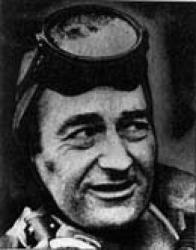
Lothar Erwin Lutze was born in 1940 in Schneidemühl, Pomerania, in a craftsman's family. In January 1952, he traveled with his parents to visit relatives in West Germany and remained there indefinitely. After graduating from a sales course in 1959, Lutze volunteered for a four-year service in the Air Force.
In 1960, Lutze was recruited by an agent of the East German secret service, the "Stasi." For a monthly payment of 500 marks, he provided information on everything he had access to within the Air Force.
Espionage Activities
After his military service, Lutze settled in Mainz and attended English language courses, which he completed in December 1964. To enhance his language skills, he found employment at an American military club in Bad Kreuznach.
Simultaneously, Lutze began recruiting agents. In 1966, he enlisted his childhood friend, Hans Jürgen Wiegel, who, along with his wife Ursula, became responsible for courier services between East and West Germany.
In October 1966, Lutze secured a position at Lufthansa Airlines in Cologne. He managed to steal a bag of diplomatic mail destined for the Foreign Ministry's overseas missions and sold it to a Stasi agent.
Lutze's next place of employment was an electronic firm in Cologne, where he acquired documentation of a West German radio direction-finding system for East German intelligence.
Penetration of the Ministry of Defense
In 1972, Lothar Lutze married a secretary from the Ministry of Defense. Through her, he gained access to a neighboring department as a courier.
Despite negative reviews, Lutze was promoted from courier to manager of classified files. He was responsible for sorting and, when necessary, photocopying incoming and outgoing correspondence related to NATO fuel pipelines and the supply of fuel to West German forces and their allies.
Unmasking and Arrest
Suspicions arose regarding the Lutzes after a colleague noticed their opulent lifestyle. Military counterintelligence (MAD) placed them under surveillance, but initial investigations proved futile.
Ultimately, the Lutzes' downfall was their own carelessness. In June 1976, another couple, the Gerstners, were arrested in Koblenz for espionage. Among the seized evidence were a photograph and a note with Wiegel's name.
Confronted, Wiegel admitted to his recruitment by Lutze. On the night of July 2, Lothar and Renate Lutze were arrested at their villa.
Impact and Consequences
The arrest yielded a wealth of evidence, including a sophisticated radio transceiver, cameras, and film, some of which had already been developed. The most significant find was a top-secret report from the Bundeswehr, providing detailed information on its state of readiness, plans, and weaknesses.
Another document, known as "Green Pink Bush," contained highly classified plans for NATO's response to potential Soviet actions against West Berlin. It outlined scenarios ranging from protests to military intervention.
Lutze also sold design plans for the "Leopard 3" battle tank and provided details on fuel supply systems and NATO oil pipeline activation protocols.
The investigation revealed that the Lutze trio had access to classified documents in the Ministry of Defense for an inordinate period. The scale of the damage inflicted on NATO's security and the effectiveness of its response to potential threats remained uncertain.
In June 1979, the Supreme Court of Düsseldorf sentenced Lothar Lutze to 12 years in prison and his wife to 6 years. They were later exchanged for two West German agents captured by East German counterintelligence.