Mai Elisabeth Zetterling
 Great Britain
Biography of Mai Elisabeth Zetterling
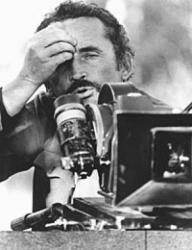
Mai Elisabeth Zetterling was a Swedish actress, film director, screenwriter, and producer with a career spanning over 50 years. She was born on May 24, 1925, in Västerås, Västmanland, Sweden, to a working-class family. From 1929 to 1932, Mai lived in Australia with her mother and stepfather, but life abroad was not better than in her homeland, and the family returned to Sweden. As a teenager, Mai was involved in a children's theater club, although she mentioned in her autobiography that she finished school illiterate. After working in a pharmacy and a mail-order company, she decided to try her luck in the theater. Zetterling began her acting career at the age of 17 at the Royal Dramatic Theatre (Dramaten), and her first appearance on the big screen was in the 1941 comedy "Lasse Maja." Three years later, she starred in Ingmar Bergman's drama "Torment," a breakthrough role that brought her popularity not only in Sweden but also throughout Europe. Her sensitive portrayal of a simple girl who becomes a victim of a sadistic teacher became a sensation and is now considered a hallmark of Swedish cinema. The film made Mai an international star. In 1947, Zetterling received an offer to work in British cinema. Her first English film was the war drama "Frieda," followed by the leading role in Bergman's drama "Music in Darkness." The studio promoted the young and beautiful actress as the next sex symbol of the era and paired her with the most attractive male actors. In 1954, she accepted an offer to play the lead role in her only Hollywood film, "Knock on Wood," and realized she hated Hollywood. Mai returned to England and shone on stage in the production of "A Doll's House." In the 1960s and 1970s, she was one of the few women who found steady work as a director. Her first attempt, the short documentary film "The War Game," won the first prize at the Venice Film Festival in 1963. Many of her subsequent films explored the theme of female sexuality and focused on the role of women in society. Among her directorial works are "Loving Couples" in 1964, "Night Games" in 1966, "Doctor Glas" in 1968, "The Girls" in 1969, "Vincent the Dutchman" in 1975, "Of Seals and Man" in 1978, "Lady Policeman" in 1979, "Scrubbers" in 1983, and "Amorosa" in 1986. In addition, she wrote books for children, stories, and novels. One of her novels, "Night Games," she adapted into a screenplay and brought to the screen. In 1985, she published her autobiography titled "All Those Tomorrows." Mai was married twice. Her marriage to Norwegian actor and dancer Tutte Lemkow lasted from 1944 to 1953 and ended in divorce, although it brought Mai a daughter and a son. In 1958, she married writer and screenwriter David Hughes, with whom she worked on some of her films. They divorced in 1979, and a year later, Hughes got married again. Mai never remarried. Towards the end of her life, after a 14-year hiatus, Mai returned to the film industry as an actress. Her most famous role in her later years was the indomitable grandmother Helga Eveshim in the 1990 film "The Witches," where she had to fight against the wicked character played by Anjelica Huston to save her grandson from a coven of witches. The actress died of cancer on St. Patrick's Day, March 17, 1994, in London, England, at the age of 68. At the time of her death, she was working on the film "The Woman Who Cleaned the World," for which she wrote the screenplay. Recently released documents from the National Archives in London reveal that Mai Zetterling belonged to the so-called "Hollywood Left," a political group that shared socialist beliefs. British security agents monitored the actress, suspecting her of connections with communists. However, unlike Hollywood, Britain never had a system similar to the blacklists that existed in the United States.