Mamedali Abasov
 Azerbaijan
- Early Life and Military Career
- The Nazi Invasion
- Becoming a Sniper
- Battles and Accomplishments
- Liberation of Pechengskaya Oblast
- Post-War Life
Early Life and Military Career
Born in 1920 in Azerbaijan, Mahammadali Abasov came from humble beginnings as the son of a peasant. Before the war, he worked as a teacher in his village. In 1940, he joined the Red Army and was sent to serve in Murmansk, the main base of the Northern Fleet. Abasov swore his oath in the spring of 1941.
The Nazi Invasion
When Germany invaded the Soviet Union in June 1941, Abasov's coastal regiment saw its first action. In his diary, Abasov vividly described the chaos and destruction that ensued: explosions, burning buildings, and the loss of his beloved horse. Amidst the carnage, Abasov fought bravely, his actions earning him a commendation.
Becoming a Sniper
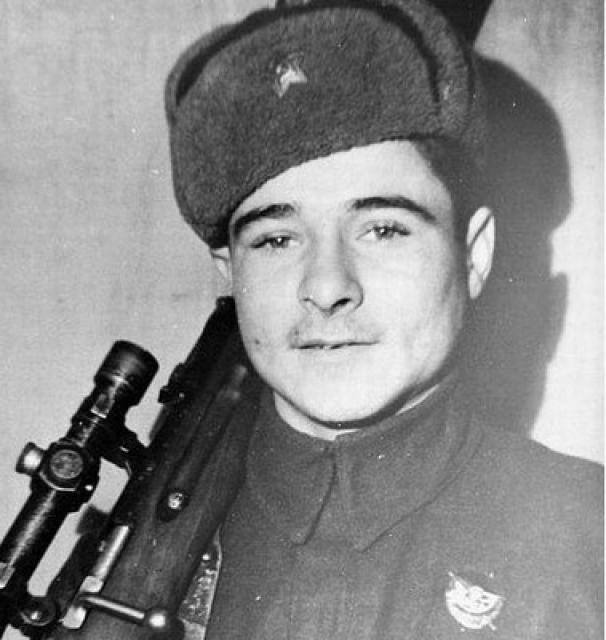
Abasov's small stature proved to be an asset in his decision to become a sniper. Drawing on the hunting skills taught to him by his father, he excelled at eliminating enemy troops from afar. Abasov's effectiveness as a sniper was further enhanced by his military training and the mentorship of experienced comrades like Anatoly Bredov.
Battles and Accomplishments
From October 1942, Abasov fought on the front lines as part of the 63rd Kirkenes Red Banner Marine Brigade. He quickly established a formidable reputation. By November 1942, he had killed 25 enemy soldiers, earning the admiration and respect of his fellow Marines.
In December 1942, Abasov was awarded the Order of the Red Banner for his bravery and leadership. By this time, he had trained three additional snipers. Abasov's tactical skills were also recognized, and he often led groups of sharpshooters in ambushes against German forces.
As a testament to his marksmanship, Abasov kept a tally of his kills by knotting a red cord. After reaching 133 kills, the cord was taken from him and preserved in the Museum of the Great Patriotic War.
Liberation of Pechengskaya Oblast
In October 1944, Abasov participated in the liberation of the Pechengskaya Oblast and the city of Petsamo. Despite heavy enemy resistance, Abasov successfully eliminated German observers, contributing to the Allied victory.
Post-War Life
After the war, Abasov returned home and resumed his education, graduating from university as an agronomist. He became a distinguished member of his community, serving in various political and civic roles. Abasov passed away in the 1990s, leaving behind a legacy of bravery and service to his country.