Marc Stein
 Hungary
- Early Life and Career
- First Explorations in Eastern Turkestan
- Discoveries in Taklamakan Desert
- Knighthood and Unmasking of Islaim Akhun
- Later Explorations and Legacy
Early Life and Career
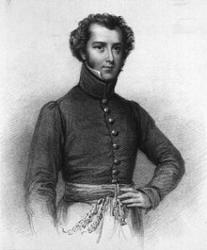
Sir Aurel Stein was born into a Jewish family in Budapest, Hungary. He spent much of his life working for the British government, including for intelligence purposes. Stein began his career at the Oriental College in Lahore, where he prepared the ancient Sanskrit historical text "Rajatarangini" by Kalhana for publication in 1892. He worked on the English translation of this work until 1900.
First Explorations in Eastern Turkestan
Inspired by Sven Hedin, Stein first visited Eastern Turkestan in 1900, following the Silk Road to Khotan. This expedition set the stage for his renowned journey in 1906-08, during which he lost several toes on his right foot due to frostbite.
Discoveries in Taklamakan Desert
Despite the hardships, Stein's discoveries were remarkable. He established caravan routes connecting Europe and China during the Roman Empire. In Luan, he found texts in unknown Tocharian languages and unearthed Europoid mummies of their supposed speakers. Crossing the Taklamakan Desert, he discovered the Cave of a Thousand Buddhas near Dunhuang, containing approximately 40,000 invaluable manuscripts, including the ancient Turkic "Book of Divination" and the world's oldest printed book.
Knighthood and Unmasking of Islaim Akhun
Stein's expeditions sparked excitement in Europe's academic community, leading King George V to knight him in 1912. That same year, he exposed Islaim Akhun, who had misled scholars with forged "Greco-Buddhist" birch bark manuscripts.
Later Explorations and Legacy
Stein returned to Eastern Turkestan in 1913-18 and 1930, shifting his focus southwest towards the ancient Kushan kingdom. His research centered on Greco-Buddhist antiquities and the eastern limits of Alexander the Great's conquests. Stein's work illuminated the Macedonian army's route in India.
He died during the planning stages of a long-awaited journey to Afghanistan and was buried in Kabul. Stein's contributions to archaeology and history remain significant, providing invaluable insights into the Silk Road and ancient civilizations of Central Asia.