Marcus Fabiu Quintilianus
 Italy
Italy- Mark Fabius Quintilian: Roman Orator and Educator
- Teaching Rhetoric in Rome
- An All-encompassing Education
- A Timeless Work
Mark Fabius Quintilian: Roman Orator and Educator
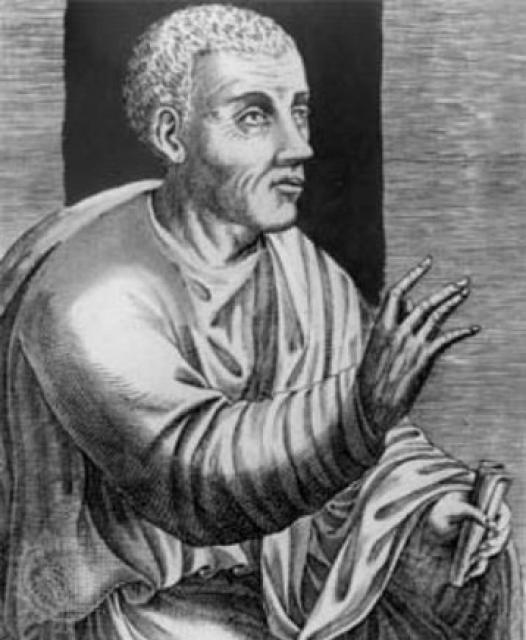
Mark Fabius Quintilian was a Roman orator and educator, born in Calagurris (modern-day Calahorra, Spain). He received his initial education in Rome and then returned to Spain in 61. However, in 68, Emperor Galba, who had previously served as governor in Spain, summoned him to Rome.
Teaching Rhetoric in Rome
In Rome, Quintilian became a teacher of rhetoric and was granted a stipend from the treasury by Emperor Vespasian. He had many outstanding students, including Pliny the Younger and two grandnephews of Domitian. Around 88, Quintilian stopped teaching and speaking in court, dedicating himself to the composition of his treatise "Institutio oratoria" (Education of an Orator) in 12 books.
An All-encompassing Education
In this work, Quintilian not only discussed the art of eloquence but also everything that contributes to a well-rounded education. According to Quintilian, only a person with such an education can become an orator. The content of the treatise can be summarized as follows: the first book covers the initial education of a child, the second book discusses education under a rhetoric teacher, books three to seven focus on inventio and dispositio (the finding and arranging of material), books eight to eleven describe elocutio (style) and memoria (memory), and the twelfth book depicts the portrait of a perfect orator.
A Timeless Work
Although many of the technical aspects of rhetoric discussed by Quintilian have lost their significance today, his clear style, sound reasoning, and abundance of examples give his work vitality. Particularly interesting are books one, ten, and twelve. In the first book, Quintilian emphasizes the responsibility of parents in the upbringing of their children, the importance of choosing nurses and tutors, the necessity of fostering good habits, teaching not only Latin but also Greek, and nourishing the child's mind. Quintilian highlights the advantages of formal education over homeschooling, citing the element of competition, and discusses the need for teachers to possess a special tact and keen perception. He also addresses issues of discipline and the role of games and recreation. In the tenth book, Quintilian examines the range of reading that should form the foundation of an orator's preparation. In this concise yet comprehensive survey of Greek and Roman literature, Quintilian expresses numerous judgments that have stood the test of time. In the twelfth book, he insists that only a morally upright and well-educated person can become an orator.