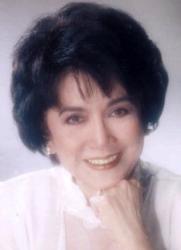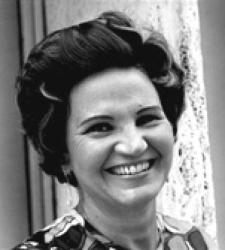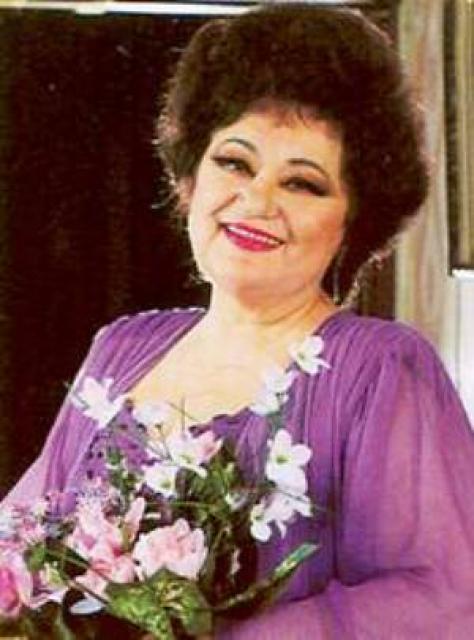
Maria Bieshu
 Moldova
Biography of Maria Bieshu
Maria Bieshu, a Moldovan singer, lyric-dramatic soprano, People's Artist of the USSR, and laureate of the State and Lenin Prizes of the USSR, has long been one of the most prominent authorities in the vocal world. This is evidenced by her constant participation in the jury of numerous international vocal competitions, such as those in Tokyo, Barcelona, Budapest, and competitions named after Glinka and Tchaikovsky, among many others.

Early Life and Education:
Maria Bieshu was born on August 3, 1935, in the village of Volontirovka, Stefan Voda district, Moldovan SSR. Her father, Luká Savelievich Bieshu (born in 1909), and mother, Tatiana Stepanovna Bieshu (born in 1913), raised Maria in the Moldovan village. She inherited her singing talent and immense love for singing from her mother, who was the best singer in the village. Professionals have often noted that Bieshu has a natural vocal placement. This is understandable, as Maria was surrounded by folk songs from an early age, and as is known, folk singers have a particularly well-developed sense of free, natural singing.
Career:
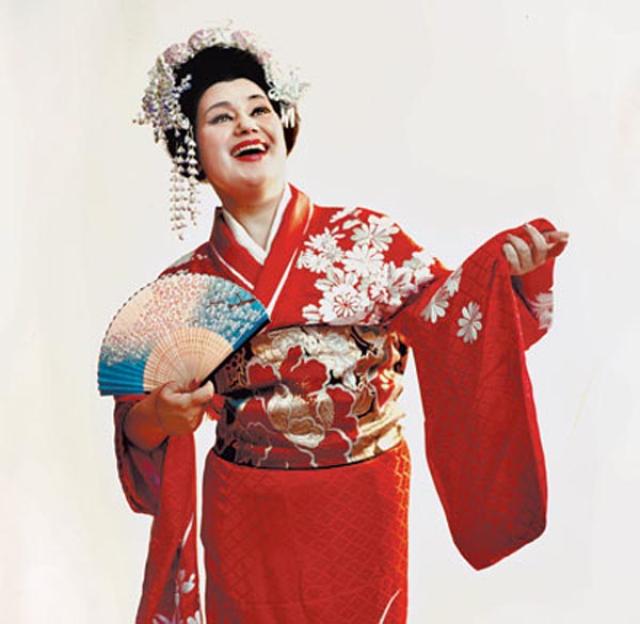
Maria Bieshu completed high school in Volontirovka and in 1951, she enrolled in the Faculty of Agroforestry of the Agricultural Technical School in Leova, Moldova. Here, she actively participated in student activities, singing, dancing, and leading a choir. After one of the artistic performances, the talented young woman was admitted without exams to the Chisinau State Conservatory to study with the pedagogue S. Zarifyan, with whom she studied for four years. Even during her studies, Maria Bieshu became a popular soloist in the orchestra of Moldovan folk music, "Fluieras." She graduated from the conservatory in 1961 under the guidance of Professor P.A. Botzat and immediately after passing her state exams, she received an invitation to the Moldovan State Opera and Ballet Theatre. Her successful debut on the opera stage took place in the spring of 1962, when she sang the role of Tosca in the eponymous opera by Giacomo Puccini. From 1965 to 1967, the young soloist of the Moldovan opera trained at Milan's La Scala Theatre, where, under the guidance of the famous pedagogue Enrico Piazza, she prepared the roles of Tosca, Aida, Cio-Cio-San, and Leonora in the operas of Giacomo Puccini and Giuseppe Verdi. During this period, she also excelled in international competitions, becoming a laureate of the first vocalists' competition within the III International Tchaikovsky Competition (third prize, 1966), and winning brilliantly at the 1st International Competition named after Miura Tamaki in Japan, where she received the title of laureate, first prize, the "Golden Cup," and the title of "The Best Cio-Cio-San in the World." After that, a busy life began for Maria Bieshu as an opera singer of global level: new roles, premieres, tours on all continents, recording albums, and appearing in films. She sings on the stage of the Bolshoi Theatre, at the leading opera houses of the former USSR, at the Metropolitan Opera in New York, and in theaters in Czechoslovakia, Germany, Bulgaria, Yugoslavia, Romania, Hungary, Poland, Finland, and Austria. She has toured cities in Japan, Australia, Cuba, and Israel, and has performed solo concerts in Rio de Janeiro and at the Olympia Hall in Paris. The true success came to the singer, but not everything was clear and cloudless. She, a honest and straightforward person, had to experience the envy of famous colleagues and the malicious ill-will of officials far from the arts who banned a long-term contract with the Metropolitan Opera, where Maria was invited to perform 10 leading roles, or the entire soprano repertoire, replacing the retiring Tebaldi and Callas. So among the roses that lined the path of the young opera star, there were many sharp thorns as well.

Roles and Achievements:
The list of roles performed by Maria Bieshu on the opera stage shows that she is an expressive interpreter of a wide range of tragic female characters, tracing their paths through love, sacrifice, and suffering. Almost all of her characters pass through this broad theme: Floria Tosca, Cio-Cio-San, who became a kind of calling card for the singer, Aida, Adriana Lecouvreur, and finally, Norma - the undeniable pinnacle of her operatic career, a role in which all facets of the singer's personality received the most complete and harmonious expression. Bieshu brilliantly overcame vocal and dramatic difficulties in this role, creating the image of a majestic Gallic priestess and a suffering earthly woman. After this performance, rare operas such as "La forza del destino," "Un ballo in maschera," "Don Carlos," and "Nabucco" by Giuseppe Verdi, "Adriana Lecouvreur" by Francesco Cilea, and "Turandot" by Giacomo Puccini appeared on the Moldovan opera stage, with Maria Bieshu performing the leading roles. The opera singer, as they say, was "divinely favored" and seemed to be created for the performance of Italian romantic operas of the 19th century, and these works prevail in her repertoire. However, it is not limited to Verdi and Puccini heroines and also includes several favorite heroines of Pyotr Ilyich Tchaikovsky's operas (Tatyana, Lisa, Iolanta, and Kuma). For the performance of these roles, the singer always found particularly precise and vivid means of expression. Maria Bieshu can confidently be called the operatic muse of Moldovan composers: all soprano parts written since the 1960s were intended for her participation ("Heroic Ballad" by Anatol Stîrcea, "Sergei Lazo" by David Gershfeld, "Alexandru Leppianu" by Grigore Musti). She has performed nearly thirty soprano roles in masterpieces of world opera classics and works by contemporary composers, all of which she has performed on the stages of the world's best opera houses. Among them are Floria Tosca ("Tosca" by Puccini, 1962), Tatyana ("Eugene Onegin" by Tchaikovsky, 1963), Aurelia ("Aurelia" by Gershfeld, 1963), Cio-Cio-San ("Madama Butterfly" by Puccini, 1963), Lisa ("The Queen of Spades" by Tchaikovsky, 1965), Aida ("Aida" by Verdi, 1966), Desdemona ("Otello" by Verdi, 1967), Leonora ("Il trovatore" by Verdi, 1969), Dominica ("Heroic Ballad" by Stîrcea, 1970), Nedda ("Pagliacci" by Leoncavallo, 1971), Zemfira ("Aleko" by Sergei Rachmaninoff, 1973), Glière ("Glière" by Valentin Năgî, 1974), Nastasya ("The Enchantress" by Tchaikovsky, 1974), Norma ("Norma" by Vincenzo Bellini, 1975), Mimi ("La bohème" by Puccini, 1977), Turandot ("Turandot" by Puccini, 1979), Iolanta ("Iolanta" by Tchaikovsky, 1979), Olga ("Sergei Lazo" by Gershfeld, 1980), Santuzza ("Cavalleria rusticana" by Pietro Mascagni, 1980), Natalya ("Into the Storm" by Tikhon Khrennikov, 1980), Leonora ("La forza del destino" by Verdi, 1981), Serafina ("Viva la mamma" by Gaetano Donizetti, 1981), Adriana ("Adriana Lecouvreur" by Francesco Cilea, 1984), Dido ("Dido and Aeneas" by Henry Purcell, in concert performance, 1984), Rita ("The Dawns Here Are Quiet" by Isaac Schwartz, 1985), Elizabeth ("Don Carlos" by Verdi, 1985), Ruksanda ("Alexandru Leppianu" by Grigore Musti, 1987), Amelia ("Un ballo in maschera" by Verdi, 1989), Abigaille ("Nabucco" by Verdi, 1995).
Voice and Artistry:
The sound of Maria Bieshu's voice is enchanting with its unique beauty, freshness, and richness of sound. It is no wonder that I. Arkhipova, a member of the jury of the International Tchaikovsky Competition, described her timbre as extraordinarily feminine, warm, beautiful, and enchanting. With an absolutely even sound throughout all registers, Bieshu's voice possesses a wide range of timbral shades. Maria Bieshu can confidently be called a singer of rare musical talent, with an infallible sense of musical truth. Her performances are filled with heartfelt warmth and genuine expression. The figurative and emotional essence of musical intonation is revealed in Bieshu's singing with maximum expressiveness and brightness. Her vocal technique does not have any "empty notes." Every sound, every melodic curve becomes a revelation, filled with profound and sincere emotions and artistic meaning.
Acting Ability:
Nature endowed Maria Bieshu not only with an extraordinary voice and subtle musicality but also with a distinctive and powerful acting talent, thus uniting these three main qualities in her personality, creating a true opera artist. Her artistic prowess is not simply a gift of acting, but rather is fueled by music and her exceptional musicality. Musical intonation and phrase dictate all elements of stage behavior, determining the pace, rhythm, movement, and facial expressions. Therefore, her characters come to life. There is no "playing," no artificiality in them; everything is organic and natural. The key to the artistic convincingness and credibility of Bieshu's performances lies in the close spiritual kinship between her heroines and herself, with her emotional essence and worldview.
Involvement in the Music Community:
Maria Bieshu has long been one of the most prominent authorities in the vocal world. This is evidenced by her constant participation in the jury of numerous international vocal competitions, such as those in Tokyo, Barcelona, Budapest, and competitions named after Glinka and Tchaikovsky, among many others. With a concern for preserving and developing the best traditions of vocal art among young people, Maria Lukyanovna Bieshu leads a vocal class at the Muzicescu Academy of Music. In 1999, Bieshu was invited to Japan, where she conducted a series of master classes for vocal students.
Later Years and Legacy:
Continuing her active touring career, Bieshu has performed in opera productions and chamber concerts in Austria, Germany, France, Italy, Hungary, Japan, Belarus, Ukraine, and Russia over the past five years. She has also appeared in seven films and television movies and has recorded numerous albums of arias, songs, and romances, as well as the main roles in opera productions. Alongside her highest creative authority, Maria Bieshu has earned respect as an organizer. Many important events and projects in Moldova's cultural life are associated with her. Several years ago, she was unanimously elected Chairperson of the Union of Musicians in the country and, in this capacity, tirelessly cares about the state and prosperity of national musical art and the needs of Moldovan musicians. She pays special attention to young musicians and children. The Festival of Young Singers named after A. Stircea, folklore festivals, and children's music festivals all have a lot of personal involvement and care from Maria Bieshu. But her main achievement in recent years is the now well-known opera and ballet festival "Invites Maria Bieshu," which is held annually in Chisinau and attracts the best singers, ballet soloists, and conductors from many theaters to perform at the National Opera.
Awards and Honors:
Maria Bieshu's talent and contributions to the arts have been recognized and honored by the state and society. She is a People's Artist of the USSR (1970), Hero of Socialist Labor (1990), laureate of the Lenin Prize, and recipient of the State Prizes of the MSSR and the USSR. She has been awarded the Orders of Lenin (1984), the Labor Red Banner (1976), and the "Sign of Honor" (1960), as well as the highest award of the Republic of Moldova - the Order of the Republic (1992). In 1992, she was elected Vice President of the International Union of Musicians. She is an academician of the Academy of Sciences of the Republic of Moldova.
Legacy:
Maria Bieshu passed away on May 16, 2012, at the Lechsanupr Hospital in Chisinau, Moldova. For several years, she had been suffering from a rare form of leukemia. She was buried at the Central (Armenian) Cemetery in Chisinau.