Mark Azbel
 Israel
Biography of Mark Azbel
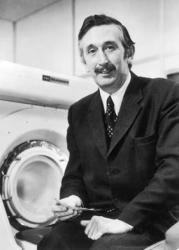
Mark Yakovlevich Azbel was a Soviet and Israeli physicist, a scientist in the field of theoretical and evolutionary biology. He was born in Poltava, Ukraine in a family of doctors, Jacob Aronovich Azbel and Cecilia Isaevna Slobodkina. During World War II, he was evacuated to Novosibirsk and later settled in Kharkiv, where his father worked at the Prosthetics Research Institute. Azbel graduated from high school in 1948 and enrolled at Kharkiv University the same year. After completing his studies, he taught mathematics at an evening school.
In 1955, Azbel defended his candidate dissertation on the topic "Towards the Kinetic Theory of Metal Conductivity" under the supervision of I. M. Lifshitz and began working at the Kharkiv Institute of Physics and Technology. In 1958, he defended his doctoral dissertation on the topic "Theory of High-Frequency Conductivity of Metals in a Constant Magnetic Field". From 1964 to 1972, Azbel taught at Moscow State University and simultaneously headed a department at the Landau Institute of Theoretical Physics.
In 1972, Azbel applied for emigration to Israel. From 1972 to 1977, he was a professor at the Moscow Institute of Engineering and Physics. In 1973, he was accepted for employment at Tel Aviv University and gave lectures over the phone four years before leaving the Soviet Union. He was also involved in the refusenik movement in the 1970s. Azbel edited the political and literary journal "Jews in the USSR" for two years (20 issues were published from 1972 to 1980), which was founded by Alexander Voronel.
In 1977, Azbel emigrated from the Soviet Union and became a professor at Tel Aviv University. He passed away in Israel on March 31, 2020.
Main Works
Azbel's main works are associated with the electronic theory of metals. He predicted the existence of the static skin effect (1963). In collaboration with E. A. Kaner, he theoretically predicted cyclotron resonance in metals and developed its theory (1955, known as Azbel-Kaner resonance, registered as a discovery in the State Register of Discoveries of the USSR in 1966).
Azbel also discovered (together with E. A. Kaner and V. F. Gantmakher) the anomalous penetration of high-frequency electromagnetic fields into metals. He predicted that Landau diamagnetism leads to the formation of spatial superstructures. In his works on superconductivity, he predicted the existence of quantum oscillations and resonances (Azbel resonances).
After emigrating, Azbel focused on quantum physics and also showed interest in theoretical biology. He developed a phenomenological theory of mortality evolution (the Azbel model is used in life tables) and conducted statistical analysis of the structure and physical properties of DNA.
Awards and Honors
Azbel received several awards and honors throughout his career:- Lomonosov Prize (USSR, 1966, 1968)
- Landau Prize (Israel, 1989)
- Alexander von Humboldt Prize (Germany, 2001)