Mark Rothko
- From Dvinsk to New York
- Searching for a visual language
- The Seagram murals
- The chapel and late paintings
- Family and legacy
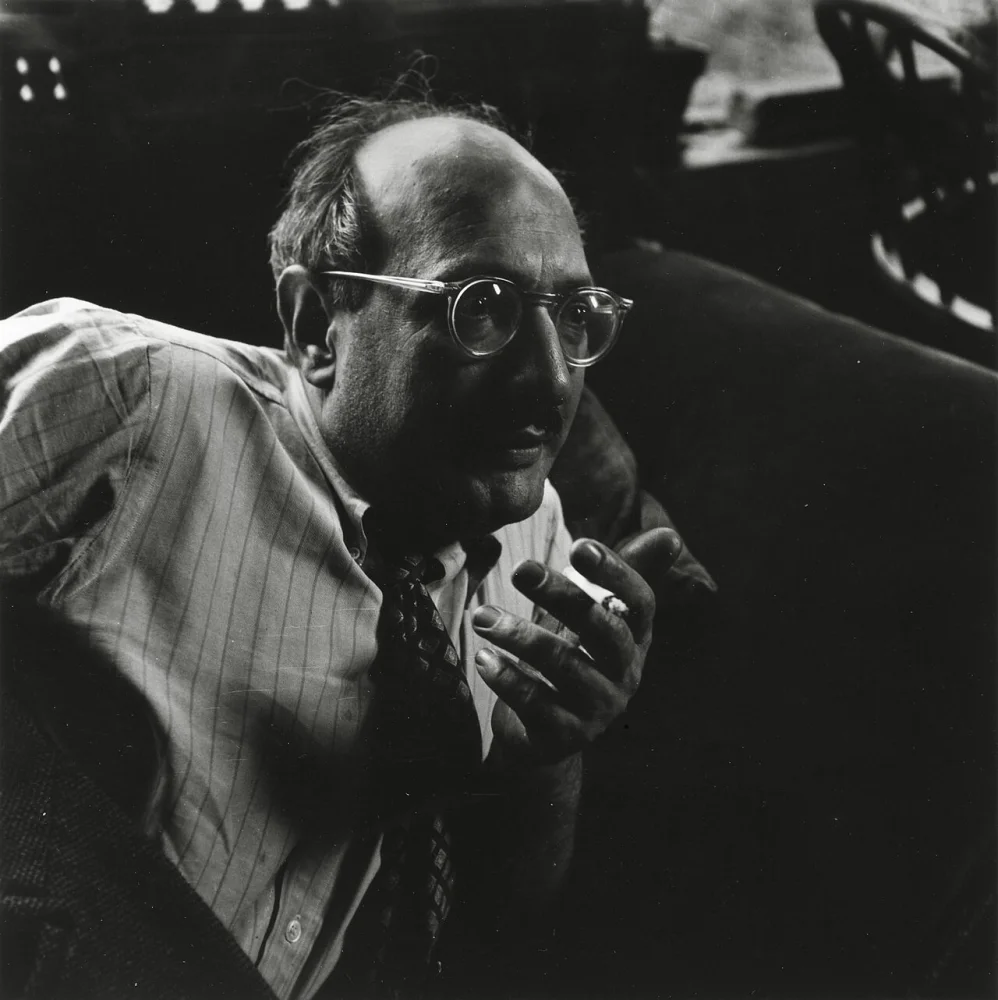
Mark Rothko’s paintings invite viewers into a space that feels both open and intensely private. The large fields of color for which he became famous were not a sudden departure from his earlier work, but the result of decades of searching through urban scenes, mythology and abstraction. A leading figure in postwar American art, he wanted his canvases to communicate profound human feeling without relying on recognizable stories or objects.
From Dvinsk to New York
Born Marcus Rothkowitz on 25 September 1903, Rothko grew up in a Jewish family in Dvinsk, then part of the Russian Empire and now Daugavpils, Latvia. His family emigrated to the United States in 1913, settling in Portland, Oregon. He excelled in school and won a scholarship to Yale University, but left in 1923 without completing a degree. He moved to New York and began pursuing art.
In the 1930s, Rothko painted city streets, interiors and solitary figures. He also taught art to children at the Brooklyn Jewish Center, a job that helped support him for more than two decades. These years brought friendships with artists including Adolph Gottlieb and Milton Avery, and his first solo exhibitions in Portland and New York.
Searching for a visual language
Rothko’s work evolved through several distinct phases. During the late 1930s and early 1940s, he drew on Greek mythology, ancient ritual and tragic themes. He later experimented with Surrealist imagery and symbolic forms. He was part of a generation of artists who believed that modern painting could address the anxieties and violence of the era without simply illustrating them.
By the late 1940s, Rothko had developed the format that became his signature: broad, softly edged rectangles of color suspended against luminous grounds. The shapes seem to hover, their boundaries shifting as the viewer spends time with them. Though often associated with Abstract Expressionism and Color Field painting, Rothko resisted labels that might limit what a painting could mean.
The Seagram murals
In 1958, Rothko accepted a major commission to create paintings for the Four Seasons restaurant in New York’s Seagram Building. He worked on a series of imposing murals, but became dissatisfied with the idea that the paintings would serve as decoration for a luxurious dining room. He withdrew from the project and returned the commission fee. Some of the paintings later entered museum collections, including Tate’s Rothko Room in London.
The decision showed his insistence that a painting’s surroundings mattered. Rothko wanted viewers to meet the work directly and seriously, rather than encounter it as a backdrop.
The chapel and late paintings
In the 1960s, Rothko created a major group of dark, contemplative canvases for a chapel in Houston, commissioned by collectors John and Dominique de Menil. Fourteen paintings were installed in the building, which opened as the Rothko Chapel after his death. Designed as a place for reflection across religious traditions, it brought together his interest in spirituality, scale and the emotional force of color.
In his final years, Rothko’s palette shifted toward deep reds, browns, grays and blacks. He continued to work even as he faced serious health problems and depression. In 1970, at age sixty-six, he died by suicide in his New York studio.
Family and legacy
Rothko married twice and had two children. His private life was often marked by strain, but he remained intensely committed to the demands of painting and to the idea that art could speak directly to human experience.
Today, his works are held in major museums around the world, and the Rothko Chapel continues to welcome visitors. His paintings reward slow looking: colors seem to change, surfaces breathe, and quiet rectangles can feel surprisingly monumental. Their power lies in the tension between simplicity and depth, an effect Rothko pursued throughout his career.