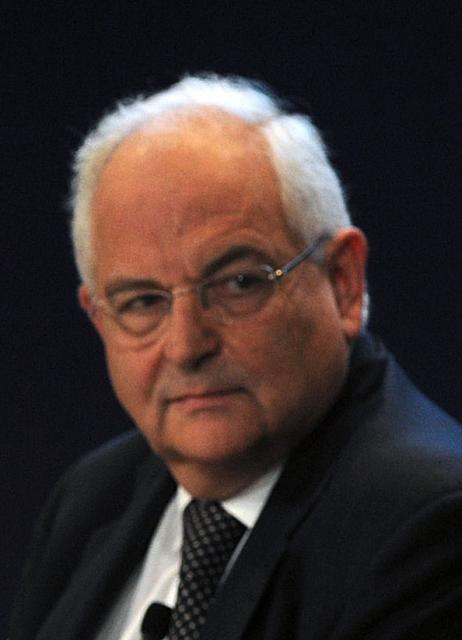
Martin Wolf
 Great Britain
Biography of Martin Wolf
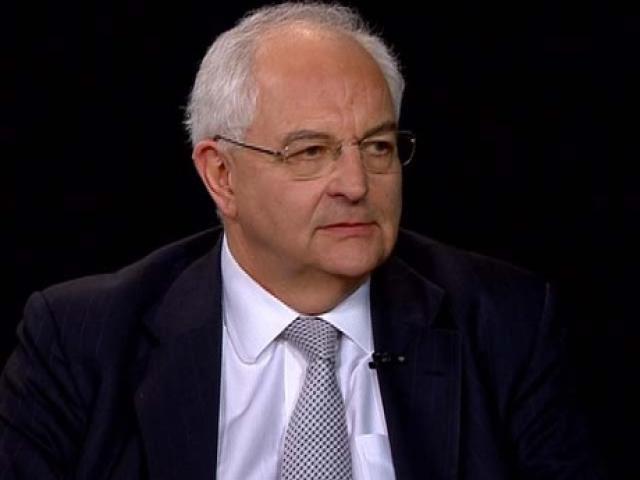
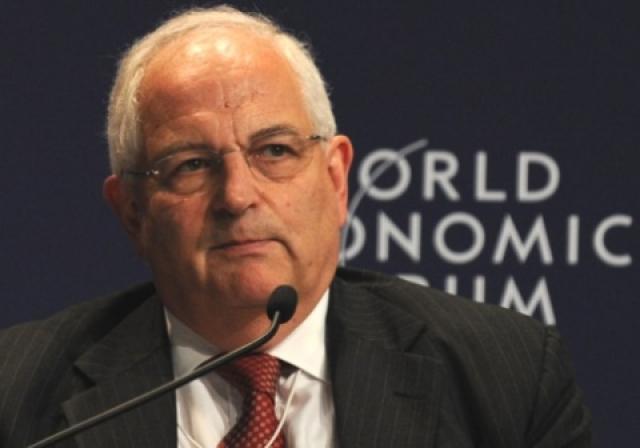
Martin Wolf is a British journalist who is considered one of the most influential writers on economics in the world. He is currently the associate editor and chief economics commentator for the British newspaper 'Financial Times'.
Early Life and Education
Martin Wolf was born in 1946 in London, England. His father, Edmund, was an Australian-Jewish playwright who fled from Vienna to England before the Second World War. Edmund met Martin's mother, a Dutch Jew who lost around thirty close relatives in the Holocaust, in London. Growing up, Wolf was deeply influenced by his parents' experiences, which led him to steer clear of political extremism and develop a genuine interest in economics. He believed that the economic mistakes of politicians were one of the main causes of the Second World War.
Wolf attended the independent University College School and went on to study at Corpus Christi College, Oxford University in 1967. Initially, he studied classics before switching to a course in philosophy, politics, and economics. As a graduate student, Wolf moved to Nuffield College, also in Oxford, and obtained a Master of Philosophy degree in economics in 1971. He never pursued a doctoral degree, stating that he did not want to become an academic.
Career
Wolf was an active supporter of the British Labour Party until the early 1970s. In 1971, he participated in a program for young professionals at the World Bank and became a senior economist at the institution in 1974. However, by the beginning of the 1980s, he became deeply disillusioned with the Bank's policies, which resulted in increased capital inflows to developing countries and subsequent debt crises. Witnessing the potential consequences of global intervention and influenced by critical works such as Friedrich Hayek's 'The Road to Serfdom,' Wolf shifted his views towards free-market economics. He left the World Bank in 1981 and became the director of studies at the London-based Centre for Economic Policy Research.
In 1987, Wolf began working at the 'Financial Times' and became the associate editor in 1990 and the chief economics commentator in 1996. Until the late 2000s, he was a prominent advocate for globalization and free markets. In addition to his journalistic work and participation in various international forums, Wolf sought to influence minds through his books. While writing the book 'Why Globalization Works' in 2004, he stated that it would not be a scientific study but an attempt to change people's opinions. However, by 2008, Wolf became disillusioned with the promotion of his theories. He shifted his interests from the free market to Keynesian ideas, which he had first encountered during his student years. Wolf became one of the most influential figures in reviving interest in Keynesian economics in 2008-2009, using his position at the 'Financial Times' at the end of 2008 and the beginning of 2009.
Achievements
Wolf is a proponent of land value taxation. In 2000, he was appointed as a Commander of the Order of the British Empire (CBE) for his contributions to financial journalism. He was included in the list of "100 Top Public Intellectuals" by 'Prospect' and 'Foreign Policy' magazines. Economist Kenneth Rogoff considers Wolf to be a "truly world-leading writer on economic and financial topics".


