Martinianus
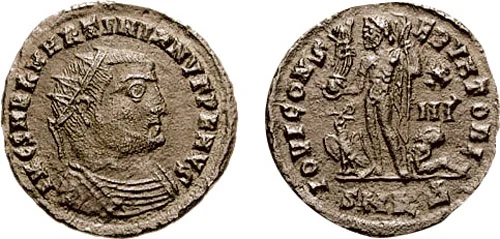
Martinianus held the title of Roman emperor for only a few months, during the final showdown between Licinius and Constantine the Great. Elevated as Licinius’s co-emperor while the eastern ruler was losing ground, he was part of a desperate attempt to reinforce a faltering regime. His brief career ended with Constantine’s victory and the elimination of Licinius’s remaining rivals.
A trusted official in a civil war
Little is known about Martinianus before 324. He had served Licinius as magister officiorum, a senior official responsible for the imperial administration and court. As Licinius’s conflict with Constantine resumed, Constantine’s son Crispus gave the western emperor a powerful military partner. Licinius responded by raising Martinianus to the rank of Augustus, making him a co-emperor.
A short-lived elevation
Martinianus was appointed in the summer of 324, after Licinius’s defeat at the Battle of Adrianople. Licinius sent him to Lampsacus, near the Hellespont, to hinder Constantine’s advance from Thrace into Asia Minor. The appointment gave Martinianus imperial authority, but the military situation was moving quickly against Licinius.
Constantine defeated Licinius at the Battle of Chrysopolis on 18 September 324. Both Licinius and Martinianus were captured. Constantine initially spared them and confined them separately, but later ordered their execution. Martinianus was put to death in 325.
Legacy
Martinianus left little independent mark on Roman government; his prominence came almost entirely from the circumstances of his elevation. His brief rule illustrates how late Roman emperors used the title of Augustus to shore up political alliances in moments of crisis. Once Constantine prevailed, the rival imperial structure built by Licinius disappeared with it.