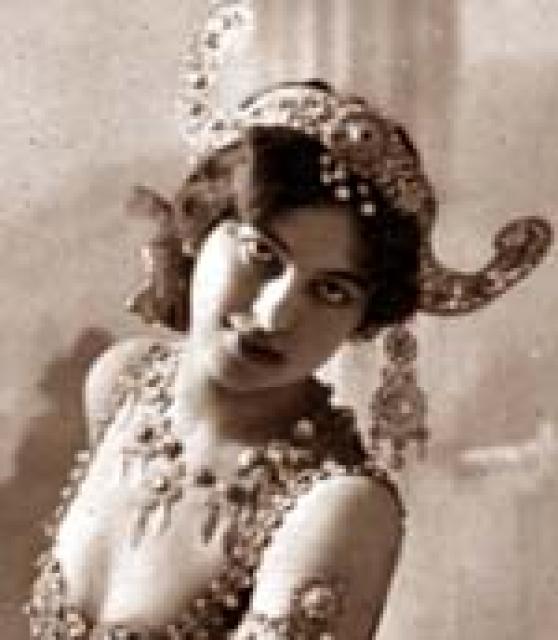
Mata Hari
 Netherlands
- Biography of Mata Hari
- Early Life
- Marriage and Dance Career
- Success and Fame
- World War I and Espionage
- Legacy
Biography of Mata Hari
Mata Hari, born as Margaretha Geertruida Zelle, was a legendary figure during her lifetime. She was an exotic dancer and a spy, captivating the hearts of millions of men with her beauty and talent for extracting state secrets. Mata Hari continues to mystify and intrigue people even after her death.
Early Life
Margaretha Geertruida Zelle was born in August 1876 in Leeuwarden, the capital city of the northern Dutch province of Friesland. She grew up as a beautiful girl with a great figure, large eyes, and black hair. At the age of 17, her parents sent her to The Hague to live with her strict uncle.
Marriage and Dance Career
Unhappy with her guardian's supervision, Margaretha sought independence. She decided to get married as a means to escape her current circumstances. She found a potential husband in Rudolf MacLeod, an officer from the Dutch East Indies, who was on leave in the Netherlands. They got married, and Margaretha gave birth to their son. However, their life in the East Indies was fraught with difficulties, leading to their eventual divorce.
Margaretha then pursued a career in dance. In 1905, she made her debut as a dancer under the stage name Lady MacLeod. Her performances received widespread acclaim, and she quickly rose to fame. She adopted the stage name Mata Hari and became renowned for her exotic and sensual dances.
Success and Fame
Mata Hari's fame grew with every performance she gave. She captured the attention of influential individuals, including Monsieur Guimet, a wealthy industrialist and art connoisseur. He suggested that she embrace her beauty and try her hand at performing Eastern dances. Mata Hari took his advice and it brought her worldwide recognition.
She performed in prestigious venues in Paris, including the famous Olympia theater. Her performances, which involved gradually shedding her clothing, created a sensation among audiences. Mata Hari's fame extended beyond Paris, with successful tours in Madrid, Monte Carlo, Vienna, and Berlin.
World War I and Espionage
When World War I broke out, Mata Hari found herself in Berlin. Her association with a high-ranking police official during a dinner drew suspicion of her involvement in espionage for Germany. Mata Hari attempted to return to Paris through Switzerland but was denied entry due to lack of proper documents.
She eventually made her way to Amsterdam and found herself in financial difficulties. It was during this time that she was approached by the German secret service, and she reluctantly agreed to become a spy for them. Mata Hari was trained in espionage techniques and instructed to gather intelligence in France.
However, her activities raised suspicions, and she was arrested by the French authorities in 1917. She was accused of being a double agent and working for the Germans. Mata Hari was found guilty of espionage and sentenced to death by firing squad.
Legacy
Mata Hari's life and death continue to captivate the imagination of people around the world. Her story represents the enigmatic allure of a femme fatale and the dangerous world of espionage. Despite the controversy surrounding her motives and actions, Mata Hari remains an iconic figure in history. Her legacy as a dancer and spy lives on, leaving a lasting impact on popular culture.


