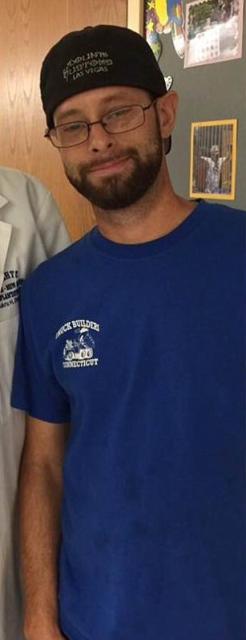
Matt Ragaini
- Matt's Story
- A Life-Saving Match
- Recovery and Advocacy
- Primary Sclerosing Cholangitis (PSC)
- Finding a Donor
Man Survives Primary Sclerosing Cholangitis After Wife Donates Half Her Liver
A man suffering from primary sclerosing cholangitis had his life saved by his wife, who donated half of her liver after an astonishing match. The odds of finding a non-blood relative match for a transplant are 1 in 100,000.
Matt's Story
Matt Ragaini, now 36, was healthy until he was 24 years old when he began experiencing stomach pain and drenching night sweats. Several doctor's visits and tests revealed Matt had primary sclerosing cholangitis (PSC), a liver disease that damages the bile ducts and can lead to liver failure. Ragaini lived with PSC for five years, during which his girlfriend (now wife), Jen, was by his side. During this time, his condition remained stable.
In 2010, shortly before his 30th birthday, Matt's condition rapidly declined. His skin turned a sickly shade of yellow-gray, and his abdomen filled with fluid. "I was literally skin and bones," Ragaini remembers. However, doctors reviewing Matt's transplant evaluation said it was remarkable he had lived that long with his disease without needing a transplant.
A Life-Saving Match
Matt's situation became more dire until 2014, when he and Jen's transplant coordinator suggested Jen might be a suitable donor and donate part of her liver. To their amazement, the compatibility test came back as a match. In February 2015, the couple underwent the life-saving surgery. The risky procedure involved potential fatality for both Matt and Jen.
Recovery and Advocacy
Two years later, the couple, both in excellent health, are sharing their story to raise awareness about the critical need for organ donation. "I was elated... I was over the moon," Jen, now 40, said of the outcome.
"It was really, really scary, especially towards the end. You just start losing hope... You just see it on your spouse's face that they are so freaking depressed and just not believing that the liver transplant is going to happen." Jen added, "I feel like we were brought together for a reason. I feel closer to my husband than ever before."
Primary Sclerosing Cholangitis (PSC)
PSC is a chronic liver disease in which the bile ducts become progressively narrower due to inflammation and scarring. It is often associated with ulcerative colitis.
Bile ducts are responsible for transporting bile, which allows the body to absorb vitamins A, D, E, and K from food. When the bile ducts are damaged, bile backs up into the liver. This damages liver cells, which can lead to scarring of the liver.
A damaged liver can regenerate itself without forming scar tissue, but in PSC, the repair process is disrupted, resulting in incomplete healing.
The exact cause of PSC is unknown, but it is believed to be caused by an unknown bacteria. When a person's symptoms worsen, a liver transplant is often recommended, as medications can no longer control the symptoms.
PSC typically progresses slowly, so a transplant can often be planned in advance. Survival rates after the transplant are good, although in some patients, PSC can recur in the new liver.
Finding a Donor
Matching a donor is the critical challenge. While spouses are not blood relatives (at least not legally), they are often the best match for each other. The odds of finding a non-blood relative match for a transplant are 1 in 100,000.
In the case of a liver transplant, the recipient's entire liver is removed and replaced with a portion of a healthy liver from a donor. The surgery involves the donor and recipient lying side-by-side on operating tables. The recipient's liver is removed first. Then the right half of the donor's liver is taken and placed into the recipient. Both livers grow to the size of a normal functioning liver in about two months.
Matt said he was initially afraid of the risks and worried about their young daughter. However, Jen, while understanding the gravity of the situation, never doubted her decision.
"I saw what my husband was going through every day... I was determined to save him," she said. "I made a promise to our daughter that I was going to save her daddy, one way or another, somehow, and I kept my promise."
As with all transplant recipients, Matt must take daily medication to suppress his body's immune system from attacking the new liver. He also has regular blood tests to monitor his health.
Matt says he feels 110% percent better today and can't say enough about his wife's sacrifice. "She did so much for me," Matt said.
Now, the couple serves as mentors for other potential donors. Matt and Jen are actively involved in the charity Donation Life.