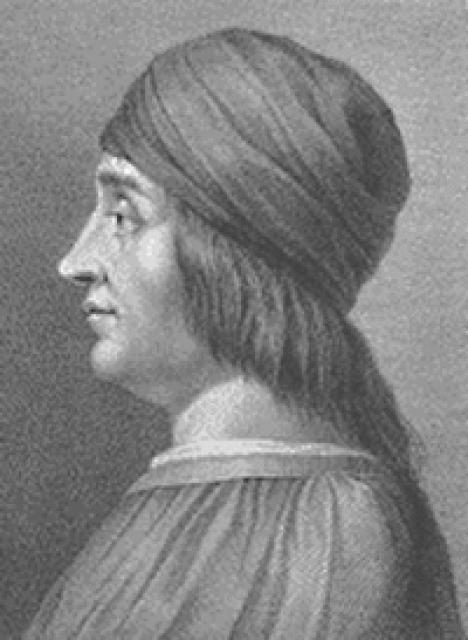
Matteo Boiardo
 Italy
ItalyBiography of Matteo Boiardo
Matteo Boiardo was an Italian poet of the Renaissance era. He was born in the castle of Scandiano near Reggio. Boiardo spent most of his life in the service of the d'Este family, rulers of Ferrara, Reggio, Modena, and other territories. Specifically, he served as the governor of Modena (1480) and Reggio (1487-1494).
Works
Boiardo's main work, the poem "Orlando Innamorato" (The Lovesick Roland), was left unfinished, ending at the 26th octave of the 69th canto. The first two books were published in Reggio in 1483, and subsequent editions were released until 1544. This poem also narrates the ancestral history of the d'Este family, particularly focusing on the figure of Ruggero.
Boiardo also wrote other works, including a collection of Latin verses that praised the d'Este family. In his fourth eclogue titled "Vasilicomantia," he describes the rule of Duke Borso as a golden age. He also dedicated a cycle of poems, "Carmina delaudibus Estensium," to the accomplishments of the d'Este family. Additionally, Boiardo translated and adapted Lucian's dialogue "Timon" into Italian tercets for the entertainment of the court.
His collection of poems, "Amorum libri tres" (Three Books of Love), consists of 180 sonnets and other Italian poems.
Legacy
Boiardo passed away in Reggio in 1494. After his death, his unfinished poem "Orlando Innamorato" was adapted and completed by Domiziano and Francesco Berni. Berni translated the poem from Lombard dialect to Tuscan and made some modifications. Both versions of the poem were frequently reprinted, with the first version being particularly popular in the 16th century and the second in the 18th century.
For a long time, Berni's adaptation was preferred over the original text until Boiardo's authorial version was published in 1830-1831 under the editorship of E. Pancini. In the 20th century, the original text of Boiardo gained greater recognition and appreciation, especially for inspiring Ludovico Ariosto to create "Orlando Furioso" (The Frenzy of Roland).