Max Reinhardt
 USA
USABiography of Max Reinhardt
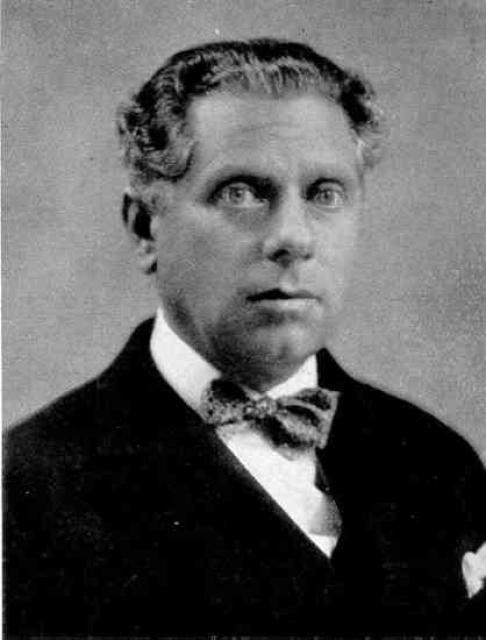
Max Reinhardt was an Austrian director, actor, and theater practitioner. He began his independent directing career in 1901 in Berlin, with the artistic cabaret "Noise and Smoke," which he founded. In 1902, this cabaret became known as the "Small Theater," where satirical parodies of contemporary drama and theater were performed.
Reinhardt's first acting experience was at the age of 19 at the Salzburg Theater. His first period of directing began in Berlin in the late 1890s with the Cikellya "Secession Stage" troupe. With astonishing success at the Small Theater, where he staged "The Lower Depths" based on Maxim Gorky's play, Reinhardt organized a larger theater in Berlin called the "New Theater," which he led from 1903 to 1906.
Inherited realistic traditions from G. Laube and O. Brahm, Reinhardt was able to combine the naturalistic features of local color, character traits, and mystical and fantastical motifs in "The Lower Depths." The repertoire of the New Theater was more diverse, including plays by Schiller, Lessing, Shakespeare, and Leo Tolstoy's "The Fruits of Enlightenment" (1903).
After completing the theater school at the Vienna Conservatory in 1893, Reinhardt worked in various theaters in Salzburg and Bratislava. From 1895, he became an actor in the German Theater in Berlin, which was then headed by O. Brahm, a literary critic and director. Brahm attracted Reinhardt to the troupe, aiming to eliminate excessive pathos and declamation that were integral parts of court theaters. Reinhardt gained valuable stage experience in Brahm's well-coordinated ensemble.
Later, literary critic P. Lindau briefly held the position of theater director. From 1905 to 1933, Max Reinhardt became the director of the theater, making a name for himself with his directing work in the Small and New Theaters. This marked the beginning of his second period of directing. He managed the theater with short breaks due to World War I, during which he had to emigrate from fascist Germany because of his Jewish origin.
Under the German Theater, Reinhardt opened a drama school, focusing on acting skills and stage speech. In 1906, he left the New Theater and established the experimental stage called the "Kammerspiele." As the German Theater mainly staged classical plays, Reinhardt turned to contemporary drama at the Kammerspiele. From 1915 to 1919, he concurrently led the Berlin Theater "Volkstheater." In 1919-1920, Reinhardt was the director of the "Große Schauspielhaus" theater. In 1924, he opened the "Comedy Theater" in Berlin and staged performances at the "Theater am Kurfürstendamm," and from 1923 to 1937, he led the "Josefstadt Theatre" in Vienna.
Reinhardt always sought to reform German theater art as he never understood naturalism and the pedantic imitation of human behavior on stage. He took inspiration from A. Ya. Tairov and G. Craig but relied most on the "verbal direction" of G. Laube. He directed classical and ancient plays and was the first director to stage contemporary German playwrights' works on the German stage, as well as plays by major foreign dramatists. He also staged pantomimes and operettas, emphasizing the rhythmicity of the performance, particularly in mass scenes where he attempted to revive ancient and medieval mass actions, aiming for their integrity.
Max Reinhardt was primarily an experimenter. He experimented with light, music, noises, scenery, and the sizes and types of stages. He was one of the initiators of the organization of the Salzburg Festival in 1920.