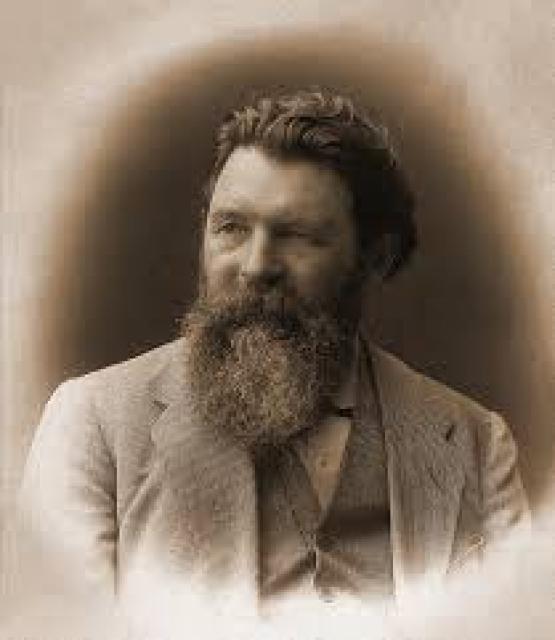
Maxim Dmitriev
- Early Life and Training
- Apprenticeship and Inspiration
- Establishment of His Own Studio
- Artistic Success and Recognition
- The Volga Cycle
- Social Commentary and Legacy
- A Trailblazer in Photojournalism
- Later Life and Legacy
Maxim Petrovich Dmitriev: A Pioneering Visionary in Russian Photojournalism
Early Life and Training
Maxim Petrovich Dmitriev was born into a humble family in the village of Povalishino, Russia, on August 21, 1858. Raised by a peasant couple, he faced financial adversity early on. Despite setbacks, Dmitriev's artistic talent emerged, and he began studying graphic design at the Stroganov School in Moscow.
Apprenticeship and Inspiration
In 1874, Dmitriev joined the renowned Moscow photographer M.P. Nastyukov. His exceptional skill and dedication led him to become a proficient retoucher and printmaker. Through Nastyukov, he met the esteemed photographer and artist Andrei Osipovich Karelin, who became Dmitriev's mentor and inspiration.
Establishment of His Own Studio
In 1886, Dmitriev opened his own photo studio on the prestigious Bolshaya Pokrovskaya Street in Nizhny Novgorod. His artistic flair and technical expertise quickly garnered recognition. His pivotal moment came in 1889 at the Moscow Photography Exhibition, where his diverse portfolio showcased his mastery of portraiture, landscapes, and genre scenes.
Artistic Success and Recognition
Dmitriev's artistic style was characterized by its meticulous realism and keen eye for storytelling. His works depicted the social realities of Nizhny Novgorod and its surrounding areas. Critical acclaim followed, both in Russia and internationally. He received numerous awards at exhibitions in Paris, Amsterdam, and Chicago.
The Volga Cycle
One of Dmitriev's most ambitious projects was the "Volga Cycle," which began in 1894. He set out to photograph the entire length of the Volga River, capturing its natural and historical landmarks. After years of arduous work, the collection of over a hundred photographs was unveiled at the Nizhny Novgorod Exhibition in 1896.
Social Commentary and Legacy
Dmitriev's photographs also explored social issues. His "Harvest Failure of 1891-1892 in Nizhny Novgorod" documented the devastating effects of famine on the local population. This poignant series earned him the respect of progressive Russian intellectuals.
A Trailblazer in Photojournalism
Dmitriev is considered a pioneer of Russian photojournalism. His ability to capture poignant moments and tell visual stories through photography paved the way for the development of this genre in Russia.
Later Life and Legacy
After the Russian Revolution, Dmitriev's studio was nationalized. Despite his declining health, he continued to pursue photography as an employee of the state. In 1933, his personal photo archive was confiscated, resulting in the loss of valuable negatives.
Dmitriev passed away in 1948 and was buried in the Bugrovsky Cemetery in Nizhny Novgorod. His legacy lives on as one of Russia's most influential artistic photographers. His works continue to inspire and document a pivotal period in Russian history.