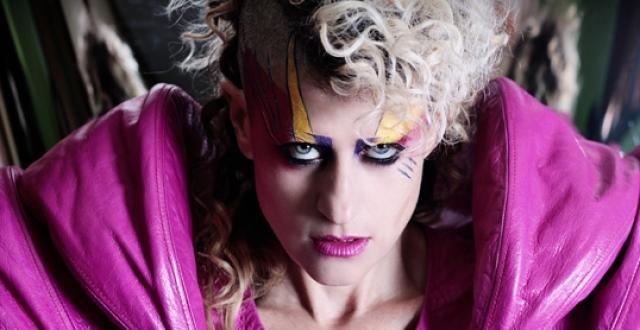
Merril Nisker
 Canada
- From Toronto teacher to Peaches
- The Teaches of Peaches
- Music, theatre and film
- A continuing provocation
Merrill Nisker, known professionally as Peaches, is a Canadian musician, producer and performance artist whose fearless mix of electronic beats, punk attitude and candid sexuality made her a defining voice in early-2000s electroclash. She arrived in the music world on her own terms, writing, producing and performing as a one-person force. Her breakthrough album, The Teaches of Peaches, made that uncompromising approach impossible to ignore; more than two decades later, she continues to use dance music, humor and theatrical provocation to challenge assumptions about gender and desire.
From Toronto teacher to Peaches
Born in Toronto on November 11, 1966, Nisker worked as a music and drama teacher before building a full-time music career. Her early projects ranged from the folk duo Mermaid Café to more experimental groups, including Fancypants Hoodlum and The Shit. When those collaborations ended, she began making tracks on her own with a Roland MC-505 groovebox, combining beats, samples and live instrumentation in a sound she could control from the ground up.
She chose the stage name Peaches after hearing the final speaker in Nina Simone’s song “Four Women” declare her name. Nisker has explained that the reference was to that line, not a claim to share the historical struggles described in the song. The name became a vivid fit for the playful, irreverent persona she was creating.
The Teaches of Peaches
Nisker began writing her first album as Peaches at 33, after surviving thyroid cancer and the end of a long relationship. Released in 2000, The Teaches of Peaches fused minimal electronic production with punk, hip-hop and bawdy humor. Its best-known track, “Fuck the Pain Away,” became an underground anthem and later reached a wider audience through its use in the film Lost in Translation.
Peaches’ live shows made the music’s challenge to convention physical as well as audible. She paired blunt, sexually frank lyrics with high-energy movement, costumes and deliberately outrageous staging. Her work flipped familiar rock performance codes, asking why men’s sexual bravado was often called rebellious while women’s was treated as shocking. Her approach helped establish her as a sharp comic and feminist presence in electronic music.
Music, theatre and film
The Teaches of Peaches was followed by albums including Fatherfucker, Impeach My Bush, I Feel Cream and Rub. Nisker also expanded into directing, writing and stage performance. She created the electro-rock opera Peaches Does Herself, later adapted as a film, and appeared in works including Monteverdi’s L’Orfeo and Brecht’s The Seven Deadly Sins. Her one-woman show Peaches Christ Superstar reworks the familiar rock opera through her own irreverent lens.
Her artistic reach includes collaborations with performers from Iggy Pop and Daft Punk to Christina Aguilera and Yoko Ono, as well as music-video direction and multimedia installations. Her work has also earned scholarly attention for its treatment of gender, sexuality and bodily autonomy.
A continuing provocation
In 2026, Peaches released No Lube So Rude, her first studio album in more than a decade. Its brash electronic and punk sound revisits the frankness of her early work while taking on age, identity and the pressure to silence unconventional voices. From the basement jams that started her music career to a decades-spanning body of records and performance art, Peaches has built an enduring career around creative self-determination and the right to be loudly, joyfully, unmistakably herself.