Michael Latri
 France
- Mikhail Latry: A Master of the Brush and Clay
- Artistic Education and Travels
- Academic Recognition and Impressionist Style
- Ceramic Masterpieces and Crimean Sanctuary
- Emigration and Artistic Flourishing in Greece
- Art Deco Influence and Paris Years
- Recognition and Legacy
Mikhail Latry: A Master of the Brush and Clay
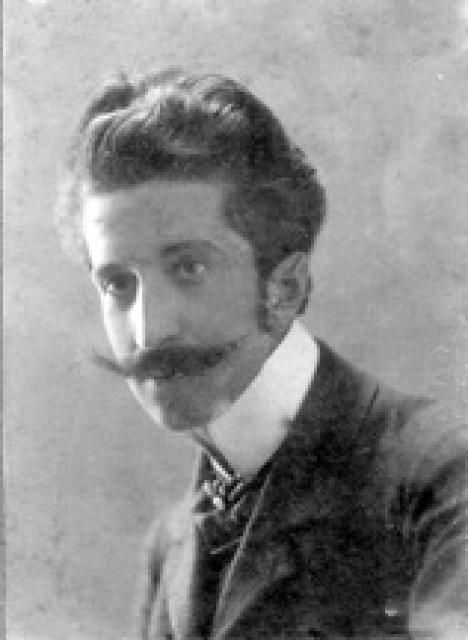
Early Life and InfluencesMikhail Latry was born in Odessa, Ukraine, on October 31, 1875. His maternal grandfather was the renowned seascape painter Ivan Aivazovsky, who became his first mentor and sparked his passion for art. Latry spent much of his childhood in Feodosia, where he was deeply influenced by Aivazovsky's breathtaking landscapes.
Artistic Education and Travels
In 1896, after completing his studies at the Richelieu Gymnasium, Latry enrolled in the Imperial Academy of Arts in St. Petersburg, where he studied under the renowned landscape painter Arkhip Kuindzhi. Inspired by Kuindzhi's lessons, Latry traveled extensively through Europe, visiting Greece, Italy, Turkey, and France, where he honed his skills under the tutelage of Simon Hollósy and Hans Adolf Bühler.
Academic Recognition and Impressionist Style
Latry returned to St. Petersburg in 1899 and was accepted as a non-matriculated student at the Imperial Academy of Arts. He completed his studies in 1902 and began painting evocative impressionistic landscapes in oil, tempera, and watercolor. Many of his works depicted the picturesque landscapes of Crimea and Greece. His paintings were exhibited at the Imperial Academy of Arts, the New Society of Artists, and the Mir Iskusstva (World of Art) group.
Ceramic Masterpieces and Crimean Sanctuary
In 1905, Latry established a ceramics workshop on his estate in Baran-Eli near Feodosia. He devoted much of his time to creating exquisite ceramic pieces, which he exhibited at the itinerant "Salon Izdebsko" exhibition. Simultaneously, he played an active role in the Feodosia Society of Art Lovers and served as the director of the Feodosia Art Gallery.
Emigration and Artistic Flourishing in Greece
With the advent of the Russian Revolution, Latry left Crimea in 1920 and settled in Greece. He became the director of the Royal Ceramics Factory in Athens and delved into the creation of scenic landscapes depicting Athens and the islands of Delos and Mykonos. He participated in archaeological excavations on Delos and Mykonos.
Art Deco Influence and Paris Years
Political changes in Greece forced Latry to relocate to Paris in 1924. He established a prominent decorative arts studio, where he developed designs for vases, tableware, panels, and lacquer screens. His artistic style blended Russian symbolism with the decorative motifs of the emerging Art Deco movement.
Recognition and Legacy
In 1935, Latry held a solo exhibition in Reims, showcasing his graphic works and watercolors from his Paris period. He passed away on February 11, 1942, in Paris and was buried at the Russian cemetery of Sainte-Geneviève-des-Bois. Memorial exhibitions of his work were held in Feodosia in 1962 and 1975. The largest collection of Latry's works is preserved at the Feodosia Aivazovsky Art Gallery. His paintings are also held in prestigious collections such as the State Tretyakov Gallery, the State Russian Museum, and the Louvre.