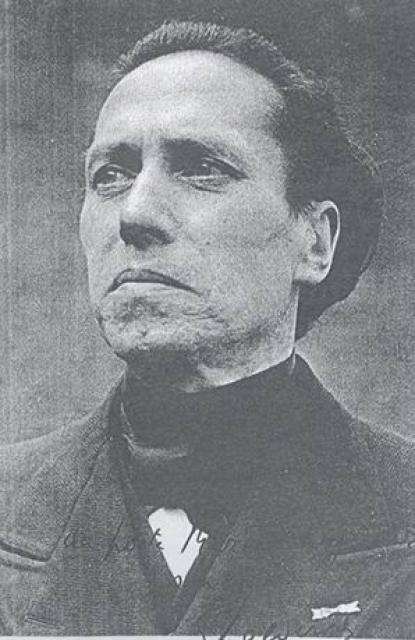
Michel de Ghelderode
 Belgium
- Biography of Michel de Ghelderode
- Inspiration and Style
- Early Life and Influences
- Recognition and Legacy
Biography of Michel de Ghelderode
Michel de Ghelderode was a Belgian playwright and a recognized pioneer of avant-garde French theater. Born on April 3, 1898, in Ixelles, Belgium, Ghelderode came from a Flemish family but spoke and wrote in French.
Inspiration and Style
Ghelderode's poetic theater is inspired by historical events, folklore, the Bible, as well as vaudeville and circus. It is characterized by elements of fantasy and mysticism. His numerous characters include jesters, ghosts, and clowns. The setting of his plays is often medieval Flanders, creating an atmosphere of decay and disintegration. Ghelderode portrays a world of debauchery and perversions, where, for example, the ascent of Christ is transformed into a burlesque descent into hell (Fastes d'enfer, 1943).
Early Life and Influences
Ghelderode was born and raised in Ixelles, Brabant, Belgium. Due to illness, he had to leave the Jesuit college, but religion greatly influenced the content of his work. In his youth, Flemish and Spanish paintings had a significant impact on him, including the works of Pieter Bruegel, Hieronymus Bosch, and El Greco. His fascination with puppets, masks, and mannequins also left a mark on his early career, particularly in his five plays for puppet theater. These were followed by The Death of Doctor Faust (1926), Don Juan (1928), Christopher Columbus (1928), and Barabbas (1932). His play Escurial (1928), set in the Spanish Golden Age, became his most popular work.
Recognition and Legacy
Ghelderode gained worldwide recognition after his later plays, especially Fastes d'enfer, were staged in France in 1947, 1949, and 1952. He died in Brussels on April 1, 1962. His innovative approach to theater and his exploration of dark and surreal themes have secured his place as a seminal figure in avant-garde French theater.