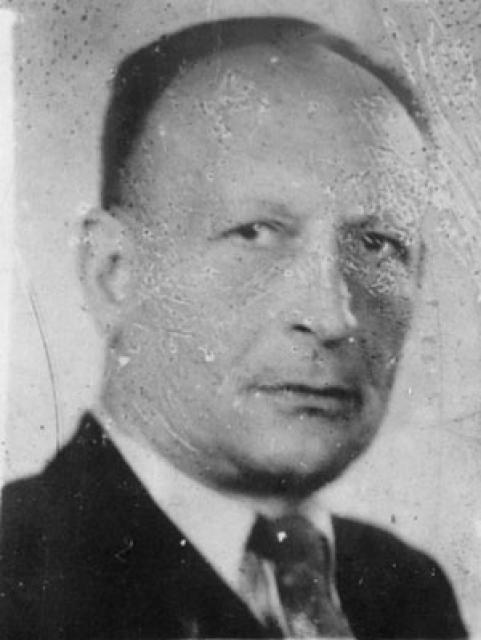
Mihail Pinchevski
 Ukraine
- Early Life and Immigration
- Literary Beginnings in Argentina
- Return to Europe and Soviet Years
- Accusations and Imprisonment
- Second Arrest and Legacy
Early Life and Immigration
Born in 1894 in the Bessarabian village of Telenești, Мойше Pinchevsky's formative years were spent immersed in the Jewish faith and culture. He attended a cheder and yeshiva in Odessa before leaving for Argentina in 1913.
Literary Beginnings in Argentina
In Argentina, Pinchevsky worked as a laborer and a teacher among Jewish gauchos. He began publishing poetry in local newspapers in 1913, and his debut collection, "Tsvit" ("Blossom"), was released in Buenos Aires in 1918.
Return to Europe and Soviet Years
Pinchevsky returned to Europe in 1920 and resided in Germany, Belgium, and Romania. In 1926, he settled in Moscow and later moved to Kharkiv in 1928. During his time in the USSR, he published 13 books, 12 plays, and numerous articles in periodicals. His notable works included the poem "Besarabie" (1929), the children's book "Far Kinder" (1930), and the play "Git Dem Firhang" (1932).
Accusations and Imprisonment
In 1938, Pinchevsky was arrested and charged with espionage. He was released in 1939 and settled in Kyiv. In 1946, he and fellow poet David Hofstein faced sharp criticism at a meeting of the Jewish Section of the Union of Writers of the USSR. They were accused of nationalism, pessimism, and lack of ideological content.
Second Arrest and Legacy
In 1951, Pinchevsky was arrested again and sentenced to ten years in a labor camp. He died shortly after his release in 1955. Posthumous collections of his selected works were published in Russian, Spanish, and Yiddish. His literary legacy continues to be recognized through performances of his poetry and the preservation of his archives at the Ukrainian Institute of Judaica in Kyiv.


