Mihail Saakashvili
 Georgia
Biography of Mikheil Saakashvili
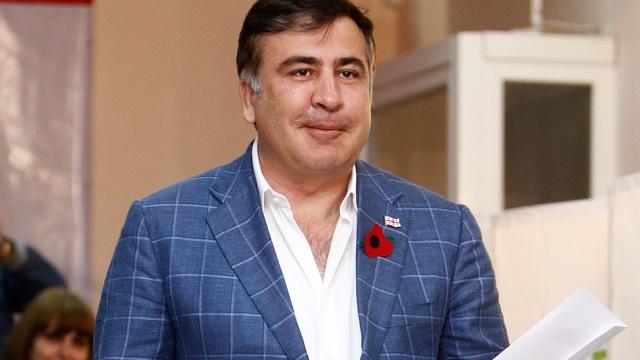
Early Life and EducationMikheil Saakashvili, the 2nd President of Georgia and former governor of Odessa, is currently one of the most discussed politicians in the post-Soviet space. He was born on December 21, 1967, in the capital of Georgia. His mother, Giuli Alasania, was a historian and later became a professor of Turkology and a teacher at the International Black Sea University. His uncle, Timur Alasania, was a former UN employee and a KGB colonel. His father, Nikoloz (Nikolai) Saakashvili, a doctor and the son of a medical university rector, remarried a few months before Mikheil's birth. The boy was raised by his stepfather, Zurab Kometiiani, a renowned professor of psychology. Mikheil attended School No.51 in Tbilisi and was an outstanding student. In addition to English lessons at school, he studied French, participated in the school theater, enjoyed swimming and basketball, and later became interested in skiing. He actively participated in public life and in his senior years became the deputy secretary of the school committee of the All-Union Leninist Young Communist League (Komsomol). Mikheil established a good relationship with his new family and still maintains friendship with his stepbrothers David and Georgi. After graduating from school with a gold medal, Mikheil enrolled at the Institute of International Law at Kiev University. The future diplomat and international expert had a keen interest in politics and certain historical moments. However, this interest ended badly when he was accused of disseminating samizdat literature in 1988 and was expelled from the institute and the Komsomol. He was called up for military service and served for two years in the Kiev Military District, where he became a member of the Komsomol again, although it had lost its significance by then. After demobilization, Saakashvili continued his education and in 1992, after receiving his diploma and becoming proficient in Ukrainian, he returned to Tbilisi.
Early Political Career
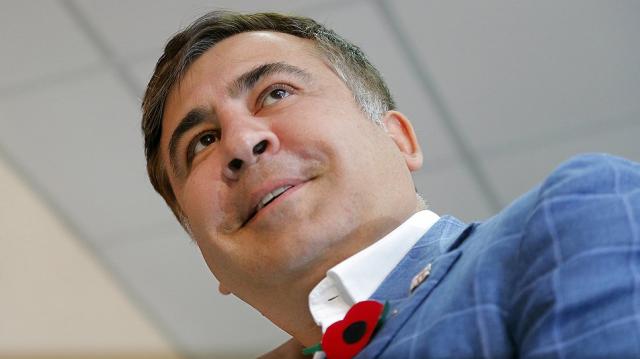
Georgia at that time was one of the most troubled regions in the post-Soviet space, with the struggle between Gamsakhurdia and Shevardnadze, political and criminal killings, the spread of "thieves in law," and economic devastation. Saakashvili began working as a legal consultant for the State Committee for Human Rights. His knowledge of many languages and good education allowed him to win a competition held by the Strasbourg International Institute of Human Rights and receive a grant for an internship in Strasbourg. It was there that Mikheil met a Dutch citizen named Sandra Roelofs, who became his wife and the mother of their sons, Eduard and Nikoloz. He also received a scholarship from the US Congress to continue his education at Columbia University in the United States, where he earned a master's degree in law. After completing his studies, Saakashvili received a scholarship to pursue a doctorate at the University of Washington. He worked at the Florentine Academy of Law, the Hague Academy of International Law, the Oslo Institute of Human Rights, and collaborated for a long time with the American firm Patterson, Belknap, Webb & Tyler, working on financial and legal support for energy-related projects. In 1995, Saakashvili returned to his homeland and became involved in political activities. He entered parliament as a member of the Union of Citizens of Georgia party led by Z. Zhvania. After the 1999 elections, Saakashvili represented Georgia in the Parliamentary Assembly of the Council of Europe and served as the Minister of Justice. His appointment was associated with a number of proposed innovations, including mandatory narcological examinations for civil servants, which he publicly underwent himself. Additionally, the new minister demanded the confiscation of property whose acquisition could not be documented, the expulsion of Chechen separatists from the country, and the closure of the Ichkeria representation in the Georgian capital. In 2001, Saakashvili made a demonstrative statement about the corruption of the president and the government, after which he resigned and became the chairman of the City Assembly, creating his own party, which ran as an opposition bloc in the 2003 parliamentary elections. After the election of Zhvania, Burjanadze, and Saakashvili to parliament, they became organizers of anti-government demonstrations held under the slogans of protests against falsification, demands for new elections, and the resignation of the government. On November 22-23, Shevardnadze was removed from power, and members of the opposition bloc entered the parliament building with roses in their hands. In the autumn of 2003, Mikheil Saakashvili was nominated as a candidate for the presidency and won a convincing victory. In the spring, he ousted the head of the Autonomous Republic of Adjara, Abashidze, and in February 2005, Zhvania died. The official cause of death was carbon monoxide poisoning, although there were rumors of the elimination of the president's most dangerous competitor. One of Saakashvili's political directions became confrontation with Russia. In the spring of 2005, the parliament passed a resolution on the withdrawal of Russian military bases from Batumi and Akhalkalaki. A year later, explosions occurred on the main gas pipeline, and Saakashvili accused Russia, after which Georgia announced its withdrawal from the CIS and rapprochement with NATO. The next step was the restoration of government control over the Kodori Gorge and the arrest of leaders of the pro-Russian opposition, which was met with a transport blockade of Georgia. The situation in the country escalated, and opposition pressure increased. In early November 2007, a massive demonstration demanding Saakashvili's resignation began, which was brutally suppressed. Opposition television channels were closed, and a state of emergency was imposed. In January 2008, Saakashvili won the presidential elections with a minimal margin and announced the resumption of control over Abkhazia and South Ossetia, which led to the "five-day war" in August 2008.
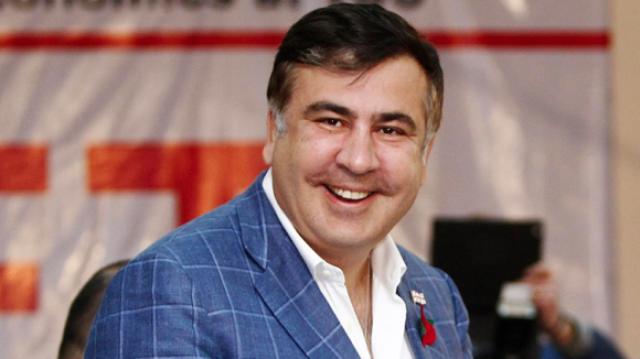
Later Years and Current Activities
In October 2012, the parliamentary elections were won by the Georgian Dream coalition led by Bidzina Ivanishvili. Immediately after his election, accusations were made against Saakashvili in Zhvania's death, and the president's associates began leaving the country. In the autumn of 2013, before the end of his presidential term, Saakashvili officially announced his departure and went to Brussels. He later taught at Tufts University. In 2014, he was summoned to Tbilisi to give explanations about his pardoning of suspects in a murder case and unlawful acts, as well as the dispersal of a demonstration and the closure of television channels. After refusing to cooperate, Saakashvili was sentenced in absentia and charged with embezzlement of state funds. His family's assets and bank accounts were frozen. Later, Saakashvili participated in the events of the Euromaidan in Kiev, acted as a consultant and advisor to Poroshenko, and in March 2015, after receiving Ukrainian citizenship, he was appointed the head of the Odessa regional administration. Currently, he is actively working to combat corruption, smuggling, and reforming state structures in the region.