Mikhail Skobelev
 Russia
- The Life and Legacy of Mikhail Dmitrievich Skobelev
- Early Life and Education
- Military Career
- Russification of Kokand
- Russo-Turkish War
- Post-War Fame and Political Views
- Second Akhal-Tekke Expedition
- Slavic Unity and Death
- Legacy
The Life and Legacy of Mikhail Dmitrievich Skobelev
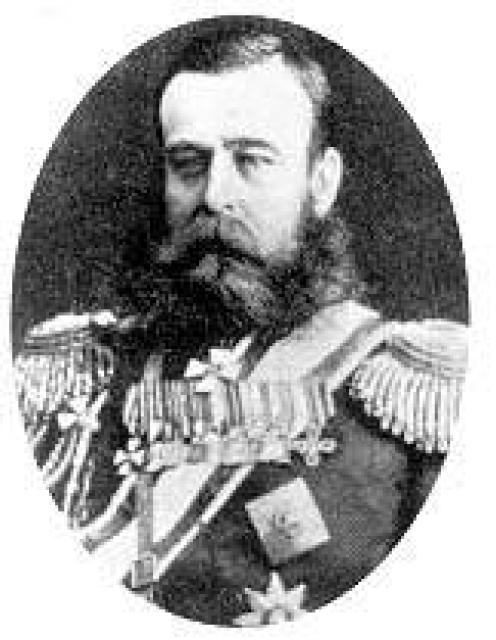
Mikhail Dmitrievich Skobelev, a renowned Russian military commander, was renowned for his exceptional bravery and brilliance as a general.
Early Life and Education
Born into the family of a lieutenant general, Skobelev received a privileged education at home and at the Girardet boarding school in Paris. He excelled in European languages and demonstrated exceptional abilities.
Military Career
Despite being accepted to the University of St. Petersburg, Skobelev's education was cut short by student unrest. He enlisted in the Cavalier Guard regiment and volunteered to suppress the Polish uprising of 1863. After transferring to the Leib-Guard Grodno Hussar Regiment, he participated in expeditions against remaining rebels.
In 1868, Skobelev graduated from the Academy of the General Staff and was deployed to the Turkestan Military District. He distinguished himself in the Khiva expedition of 1873 and the Kokand uprising of 1873-76. His bravery, organizational skills, and knowledge of the region earned him widespread recognition.
Russification of Kokand
As military governor and commander of forces in the newly established Fergana region, Skobelev implemented a policy of Russification, employing both force and compassion.
Russo-Turkish War
As a volunteer in the Russo-Turkish War of 1877-78, Skobelev gained the nickname "White General" for his conspicuous attire. He led several critical victories, including the Battle of Lovcha, the Winter Crossing of the Balkans, and the capture of San Stefano.
Post-War Fame and Political Views
Skobelev's military prowess and dedication to the well-being of his troops earned him immense popularity. As a champion of Slavic unity, he denounced Austria-Hungary and Germany as enemies of Slavic peoples, causing international friction.
Second Akhal-Tekke Expedition
In 1880-81, Skobelev commanded the Second Akhal-Tekke Expedition, which resulted in the conquest of Turkmenistan. He received the rank of General of Infantry and the Order of St. George, 2nd degree.
Slavic Unity and Death
Skobelev's advocacy for Slavic unity angered Alexander III, who recalled him from Europe. He died suddenly of heart failure in 1882.
Legacy
In 1912, Moscow unveiled a monument to Skobelev, which was later demolished during the Soviet era. However, his legacy as a brilliant commander, a reformer, and a symbol of Slavic unity endures.