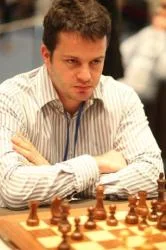
Mikhail Tal
Mikhail Tal turned risk into an art form. A Latvian chess prodigy with a dazzling appetite for complications, he became the eighth World Chess Champion in 1960 at just 23, defeating the celebrated strategist Mikhail Botvinnik. His reign lasted only a year, but his imaginative attacks, quick wit and sheer joy in the game made him one of chess’s most beloved champions. Known as the “Magician from Riga,” he remained a force at the board long after surrendering the crown.
A prodigy from Riga
Tal was born in Riga, Latvia, on 9 November 1936, when the country was independent. He grew up in a Jewish family and learned chess as a child. His gifts soon caught the attention of Riga master Alexander Koblencs, who began coaching him in 1949. Tal’s progress was rapid: he reached the Latvian championship while still a teenager and began to attract attention on the broader Soviet chess scene.
He also pursued an education in literature at the University of Latvia, later teaching school in Riga. Chess, however, became his consuming pursuit. In 1957, aged 20, he won the USSR Championship, one of the strongest national tournaments in the world, and was awarded the grandmaster title. He won the Soviet championship again the following year, confirming that his first triumph was no fluke.
A daring path to the world title
Tal’s play was built around initiative and surprise. He was willing to sacrifice material to seize the attack, sometimes choosing lines whose full logic became clear only several moves later. His opponents could be left defending positions that seemed objectively uncertain but were extraordinarily difficult to solve at the board. Tal’s flair did not mean he ignored calculation; he excelled at creating practical problems and forcing even the greatest players to make decisions under pressure.
He surged through the 1959 Candidates Tournament, earning the right to challenge Botvinnik, the reigning champion and a master of preparation. In Moscow in 1960, Tal won their match 12½–8½, with six wins, two losses and thirteen draws. The victory made him the youngest world champion in history at that time. His rapid rise had transformed the quiet chess prodigy from Riga into an international sensation.
Botvinnik reclaimed the title in their 1961 return match, winning 13–8. Tal entered the rematch with serious kidney problems, and his health was a recurring obstacle throughout his career. The loss ended his brief reign but not his appeal. Soon afterward he won the elite Bled tournament, finishing ahead of a field that included the young Bobby Fischer.
Beyond the crown
Tal continued to compete at the highest level for decades. He won the USSR Championship six times in total and played on eight Soviet teams that captured gold at the Chess Olympiad. From 1973 to 1974, he completed 95 consecutive competitive games without a loss, a run that included 46 wins and 49 draws and stood as a celebrated benchmark in chess.
His later career produced another remarkable highlight. In 1988, aged 51 and already in fragile health, he won the official World Blitz Championship in Saint John, Canada, finishing ahead of reigning world champion Garry Kasparov. The result showed that Tal’s speed and intuition remained formidable even as illness repeatedly interrupted his tournament life.
Away from the board, Tal was remembered for his humor, warmth and easygoing manner. He wrote about chess in an engaging, conversational voice, most famously in The Life and Games of Mikhail Tal, and became a celebrated commentator. His first marriage was to actress and singer Sally Landau; they had a son, Gera. Tal’s appetite for life was as famous as his disregard for routine, and his health suffered through years of kidney and liver illness.
A lasting legend
Tal died in Moscow on 28 June 1992, aged 55, after kidney failure. He had remained involved in chess almost to the end, including playing blitz shortly before his final illness. His world title lasted only from 1960 to 1961, but the measure of his influence is not the length of his reign. Generations of players have admired the fearless imagination with which he made chess feel theatrical, and fans still return to his games for the thrill of watching an attack unfold.