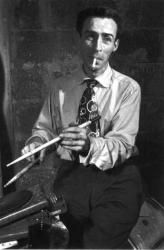
Miles Davis
 USA
USA- Miles Davis: The Black Prince of Jazz
- A Path towards Greatness
- Collaboration with Charlie Parker
- Emergence as a Leader
- Confrontation with Free Jazz
- Fusion: A Bold New Chapter
- The Black Prince of Jazz
- Health Struggles and Legacy
Miles Davis: The Black Prince of Jazz
Early Life and Musical RootsMiles Dewey Davis III was born on May 25, 1926, in Alton, Illinois, to a well-to-do dentist and landowner. His grandfather, Miles Dewey Davis I, was a prosperous businessman with a deep-seated belief in the equality of black and white Americans. This belief significantly influenced Miles's life and music.
Music played a vital role in the Davis household. His grandmother played the organ, his mother the violin and piano, and his siblings pursued various musical interests. Miles's early exposure to music sparked a passion that would define his life.
A Path towards Greatness
Inspired by his grandfather's ambitions and the music of Duke Ellington and Art Tatum, Miles embarked on a musical journey. He studied theory, listened to recordings, and joined his high school band. Despite his limited technical skills, Miles displayed a raw talent that caught the attention of trumpeter Clark Terry.
In 1944, Miles met renowned saxophonist Charlie Parker. Parker's avant-garde approach to music deeply impacted Davis, and he resolved to pursue a career in bebop.
Collaboration with Charlie Parker
In 1945, Miles joined Parker's band. Their collaboration marked a turning point in Davis's career. Parker's experimental style pushed Miles's musical boundaries and challenged conventional norms. Together, they recorded several groundbreaking albums that cemented Davis's reputation as a rising star.
Emergence as a Leader
In the late 1940s, Miles formed his own nonet, featuring an unconventional instrumentation that included two saxophones, a trombone, and a French horn. This group recorded the seminal album "Birth of the Cool" in 1949, which introduced a new era of "cool jazz" characterized by its sophisticated harmonies and sparse arrangements.
Davis continued to lead innovative bands throughout the 1950s. He experimented with modal jazz on albums like "Kind of Blue" (1959) and fused Spanish melodies with jazz on "Sketches of Spain" (1960).
Confrontation with Free Jazz
In the 1960s, the emergence of free jazz movements posed a challenge to Davis's musical aesthetics. While he respected the artistic merit of free jazz, he remained committed to a more structured approach. However, the influence of free jazz subtly crept into his music, as evidenced by the increasing freedom he allowed in his improvisations.
Fusion: A Bold New Chapter
Miles Davis's musical journey reached a pivotal point in 1969 with the release of "Bitches Brew." This groundbreaking album fused jazz with rock, funk, and Eastern influences, creating a unique and revolutionary sound. The album was a commercial success and gained a cult following among counterculture audiences.
The Black Prince of Jazz
Miles Davis's unwavering quest for musical innovation earned him the title "The Black Prince of Jazz." His ability to adapt to changing musical landscapes and his unwavering commitment to artistic integrity made him a towering figure in the world of music.
Health Struggles and Legacy
Davis struggled with health problems throughout his career, primarily due to his past drug use. In the 1970s, he underwent hip surgery and reduced his musical activity. However, in the 1980s, he made a triumphant return to the spotlight with a renewed vigor.
Miles Davis passed away in 1991, leaving behind a legacy as one of the most influential musicians of the 20th century. His groundbreaking albums continue to inspire and challenge generations of artists, and his unique sound remains a testament to his unwavering passion for musical exploration.