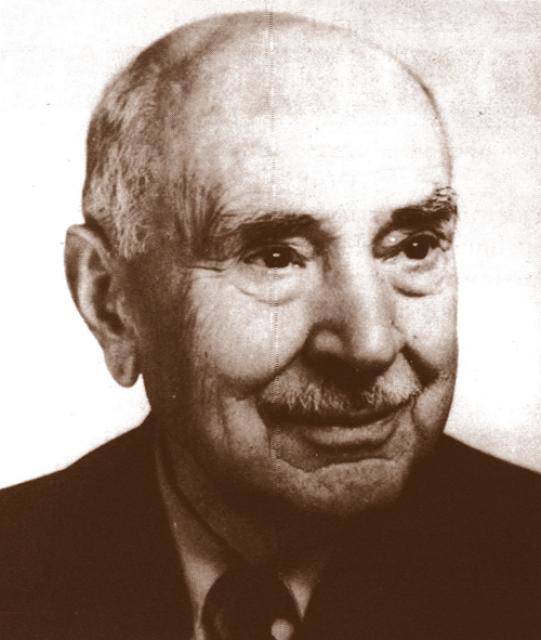
Mishael Arnaoudov
 Bulgaria
Biography of Mikhail Arnaudov
Early life and EducationMikhail Arnaudov was born on [date] in the city of [city], Bulgaria. His father, Petr Sibinov Arnaudov, was a merchant, and his mother, Drumka Panova, was a homemaker. Mikhail had two brothers, Dimitr and Iliya. Dimitr worked as the chief secretary of the municipal community in Ruse, while Iliya became one of the first Bulgarian musical directors and the first to stage Richard Wagner's operas in Bulgaria.
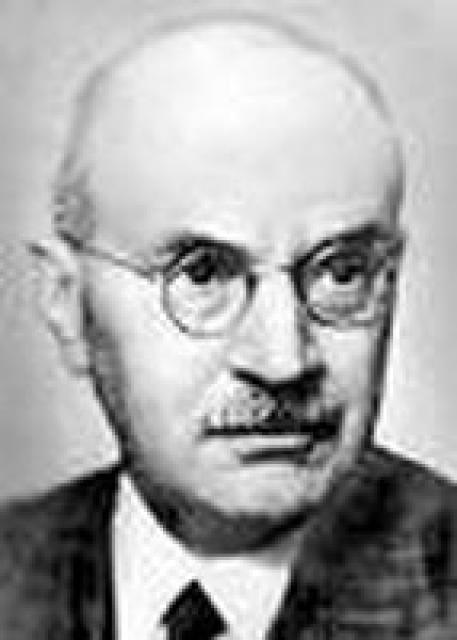
Arnaudov attended the State Boys' Gymnasium "Knyaz Boris" in Ruse and later enrolled at Sofia University, where he studied Slavic philology under the renowned professor Ivan Shishmanov. He further specialized in the universities of Leipzig, Berlin, and Prague, where he obtained his doctorate in philosophy, Slavic philology, and indology. His dissertation focused on "Bulgarian Folk Tales."
Academic Career
Arnaudov began his teaching career as a high school teacher in Vidin and later moved to Sofia in 1901. In 1907, he became the deputy director of the National Academy in Sofia. He was promoted to an ordinary associate professor in 1908 and an extraordinary professor in 1914. In 1919, he became a full professor of comparative literary history. Arnaudov also served as the dean of the Faculty of History and Philology from 1921 to 1922 and as the rector of Sofia University from 1935 to 1936.
In addition to his academic endeavors, Arnaudov was involved in various cultural and literary organizations. He served as the director of the National Theater in 1926 and the chairman of the Union of Bulgarian Writers from 1923 to 1927 and 1931 to 1933. Arnaudov was also the president of the Bulgarian Academy of Sciences and a member of the Ukrainian Academy of Sciences and the "Petőfi" Literary Academy in Hungary. He received honorary doctorates from the universities of Heidelberg and Münster.
Contributions and Works
Arnaudov was a prolific author and researcher, primarily focusing on prominent figures in Bulgarian culture, such as Paisius of Hilendar, Neofit Rilski, Vasil Aprilov, Ivan Seliminski, Georgi Rakovski, and Lyuben Karavelov. He also studied the works of Bulgarian literary classics like Ivan Vazov, Peyo Yavorov, Kiril Hristov, Yordan Yovkov, and Dimcho Debelyanov.
Aside from his interest in literature, Arnaudov was one of the founders of modern Bulgarian ethnography and extensively researched folk poetry. He advocated for the cultural-historical approach in literary studies.
Arnaudov also served as the editor of the journal "Bulgarian Thought" from 1925 to 1943. He published a comprehensive bibliography titled "Bulgarian Writers" in six volumes between 1929 and 1930, with an updated edition released in 2003 and 2004.
Later Years
Arnaudov's political involvement led to his arrest after the September 9, 1944 coup. He served as the Minister of National Education in Ivan Bagryanov's government from June 1 to September 2, 1944. Following his arrest, Arnaudov was sentenced by the so-called People's Court in 1945 to 15 years of imprisonment. During his time in prison, he translated works from French and prepared the publication of Ivan Vazov's writings. Arnaudov was released in 1947 but was initially excluded from the Bulgarian Academy of Sciences. However, he was reinstated in 1961.
To honor his contributions, a secondary school in Sofia was named after Academician Arnaudov, and the "Arnaudov Readings" events are held in Ruse.