Mohammed-Gabdulhai Kurbangaliyev
- Early Life and Education
- Religious Leadership
- Political Activism
- Emigration and Religious Unity
- Religious and Cultural Contributions
- Post-World War II
Muhammad-Gabdulhay Kurmangaliyev: A Prominent Figure in the Early 20th Century
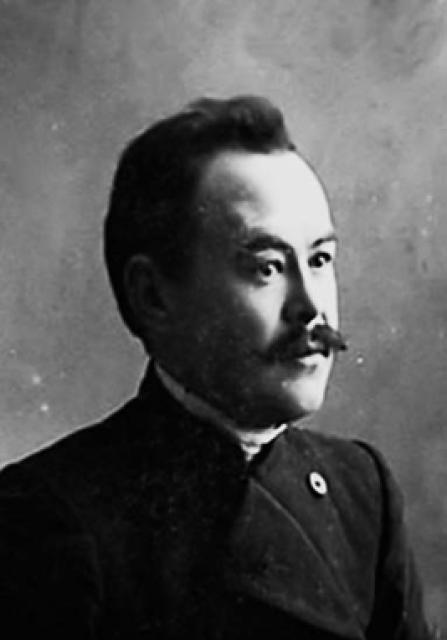
Muhammad-Gabdulhay Kurmangaliyev was a prominent religious, political, and public figure who played a pivotal role in the first half of the 20th century.
Early Life and Education
Kurmangaliyev was born in 1889 in the village of Mediak, Chelyabinsk Province, Russia. His father, Gabidulla Kurmangaliyev, was a renowned imam and religious leader known as "the lame ishan." Kurmangaliyev inherited his father's passion for Islam and pursued his education at his father's madrasah in Mediak and later at the "Rasulia" madrasah in Troitsk.
Religious Leadership
In 1916, Kurmangaliyev became the manager of the Muslim district of St. Petersburg. He was a key organizer of the Argaiashlsky canton, a Bashkir national entity in northern Chelyabinsk Province. Kurmangaliyev advocated for the autonomous spiritual governance of Muslims in Bashkortostan and opposed land socialization.
Political Activism
Kurmangaliyev played a significant role in the Bashkir national movement. He opposed the pro-Soviet stance of his rival, Akhmed-Zaki Validi, and supported the anti-Bolshevik government of Admiral Aleksandr Kolchak. He participated in the White movement and led Bashkir units within Kolchak's army.
Emigration and Religious Unity
After the White movement's defeat, Kurmangaliyev emigrated to Manchuria in 1920. There, he continued to unify Bashkir communities around Islam, Bashkir traditions, and education in the native language. He later moved to Japan in 1924 and established the Tokyo Muslim Society and a school for Muslim children.
Religious and Cultural Contributions
Kurmangaliyev founded a society for Muslims in Manchukuo (1932-1936), established a madrasah in Mukden, and published the first Quran in the Far East. He also established connections with prominent Japanese figures and received financial support from Japanese financial institutions. In 1938, he opened the "Islamiya" mosque in Tokyo, becoming the first mufti of Japan.
Post-World War II
After World War II, Kurmangaliyev was arrested by the Soviet NKVD and sentenced for treason. He was released in 1955 and returned to Bashkortostan. He spent the remaining years of his life in the city of Chelyabinsk, serving as a mullah.