Moris Escher
 Netherlands
Biography of Maurits Cornelis Escher
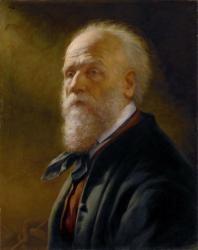
Maurits Cornelis Escher, a Dutch graphic artist, is best known for his conceptual lithographs, woodcuts, and metal engravings. He skillfully explored the plastic aspects of infinity and symmetry concepts, as well as the peculiarities of psychological perception of complex three-dimensional objects.
Escher was born in the city of Leeuwarden, the administrative center of the Dutch province of Friesland, in a family of an engineer. In 1903, the family moved to Arnhem, where the young boy spent some time learning carpentry and music. From 1912 to 1918, Maurits attended secondary school. Although he showed artistic abilities from an early age, his academic achievements were mediocre.
In 1919, Escher enrolled in the School of Architecture and Decorative Arts in Harlem. His teacher there was artist Samuel de Mesquita, who had a tremendous influence on the young man (Escher maintained a friendly relationship with Mesquita until 1944 when Mesquita, being of Jewish origin, was murdered by the Nazis). In the early 1920s, Escher frequently traveled to Italy, where he first met Jetta Umiker, who became his wife in 1924. The couple lived in Rome until 1935 when their stay in Italy, under Mussolini's regime, became unbearable. The Eschers then moved to Chateau-d’Oex, Switzerland.
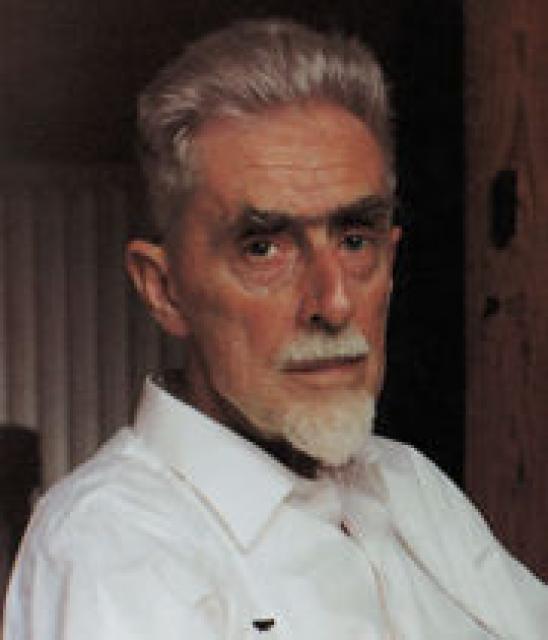
In January 1941, after the start of World War II, the Eschers returned to the Netherlands. From the 1940s to the 1970s, they lived in the Dutch town of Baarn. In July 1969, Escher created his last woodcut, "Snakes." He passed away on March 27, 1972, in his home in Laren, in the north of the Netherlands.
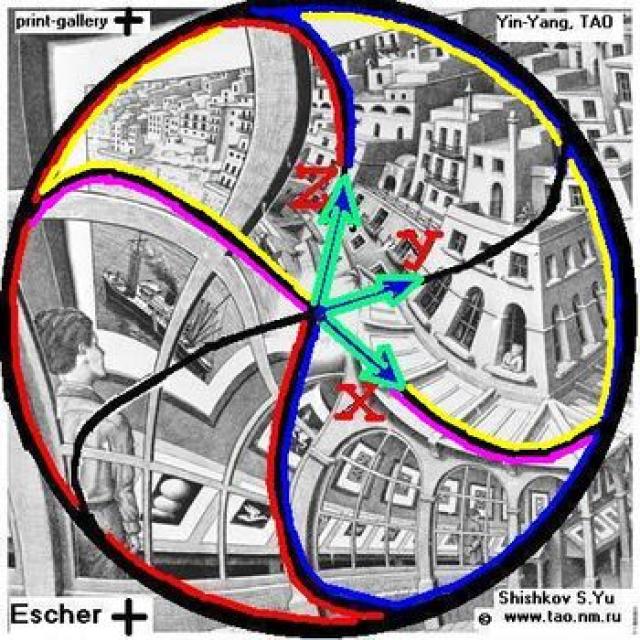
Escher's "classic" works, such as "Drawing Hands," "Metamorphosis," "Day and Night," "Reptiles," "Encounter," and "House of Stairs," are characterized by witty exploration of logical and plastic paradoxes. Combined with his virtuoso technique, they create a powerful impression. Many of Escher's graphic and conceptual discoveries have become symbols of the 20th century and have been repeatedly reproduced or quoted by other artists.
One of the most outstanding aspects of Escher's work is the depiction of "metamorphoses" in various forms in numerous works. The artist thoroughly examines the gradual transition from one geometric shape to another through subtle changes in outlines. Additionally, Escher often drew metamorphoses occurring with living creatures (birds transforming into fish, etc.) and even "animated" inanimate objects, turning them into living beings.
Maurits Escher was one of the first to depict fractals in his mosaic paintings. Decades later, scientists began studying the properties of these figures and creating digitally what Escher had drawn by hand. When looking at any of Escher's "mosaics," anyone can suspect a mathematical regularity. However, from the artist's biography and his own reminiscences, we know that he did not have a formal mathematical education. Naturally, the proposed assumption about the mathematically precise method of creating engravings does not require deep mathematical knowledge.
It is worth mentioning the following remarkable fact from the artist's life. Once, the famous geometer H.S.M. Coxeter invited Escher to his lecture on the mathematical content of his engravings and lithographs. To their mutual disappointment, Maurits Escher did not understand almost anything of what Coxeter was talking about. In his own words, "I could never get a good grade in mathematics. It's funny that I unexpectedly became connected with this science. Believe me, at school, I was a very poor student. And now mathematicians use my drawings to illustrate their books. Imagine, these learned people accept me into their company as a lost and rediscovered brother! They seem to have no idea that mathematically, I am absolutely illiterate."
In these words, there is probably some exaggeration. Nevertheless, it seems to us that mathematicians are interested in Escher's artwork not only because his works can reveal echoes of specific mathematical results. Rather, they evoke associations with general mathematical ideas.
Escher's art will be helpful in teaching mathematics. With the help of Escher's works, it is possible to explain mathematical concepts and terms studied in school, such as parallel translation, similarity of figures, equilateral figures, and periodicity. Additionally, some concepts not included in the school curriculum can be included, such as quasiperiodicity, inflation, deflation, Robinson triangles, and duality transformations. Art, especially the art of the remarkable and interesting Dutch artist Maurits Cornelis Escher, helps us understand all of the above.
In the previous chapter, we highlighted the main directions in the artist's works. However, the most interesting aspect from a mathematical point of view is the "mosaics." This chapter will be entirely devoted to the analysis of engravings in this category. We have managed to find most of such works. However, most of them do not have titles. The chapter will provide many references to numbered works and drawings. They are all presented in the appendix.
In the previous chapter, we touched upon the aspect of Escher's work related to tiling the plane or mosaics. In this chapter, we will delve into this question in more detail. Firstly, it is important to understand what tiling the plane is.
Tiling is the covering of the entire plane with non-overlapping figures. Most likely, the interest in tiling arose in connection with the construction of mosaics, ornaments, and other patterns. Many ornaments composed of repeated motifs are known. One of the simplest tilings can be described as follows: the plane is covered with parallelograms, and all parallelograms are identical. Any parallelogram in this tiling can be obtained from the initial parallelogram by shifting it by the vector u->v (vectors u and v are determined by the sides of the selected parallelogram, and n and m are integers). It is worth noting that the entire tiling repeats itself when shifted by the vector u (or v). This property can be taken as a definition: periodic tiling with periods u and v is called such a tiling that repeats itself when shifted by the vector u and the vector v. Periodic tilings can be quite intricate, and some of them are very beautiful. An example of such a tiling is the periodic tiling created by Escher ("Horsemen").
There are also interesting non-periodic tilings of the plane. In 1974, the English mathematician Roger Penrose discovered quasiperiodic tilings of the plane. The properties of these tilings naturally generalize the properties of periodic ones. An example of such a tiling can be described as follows: the entire plane is covered with rhombi. There are no gaps between the rhombi. Each rhombus tiling can be obtained from just two rhombi by shifts and rotations. Thus, it is possible to tile arbitrarily large or small areas with this property. This property is called quasiperiodicity. This tiling is not periodic - it does not repeat itself under any shifts. However, it has an important property that approximates it to periodic tilings and justifies calling it quasiperiodic. Any finite part of the quasiperiodic tiling occurs infinitely many times in the entire tiling, "equally often" throughout the plane.
It is worth noting that this tiling has a fifth-order axis (it repeats itself under a rotation of 72° around a certain point), while periodic tilings do not have such axes. Another quasiperiodic tiling of the plane, constructed by Penrose, is described as follows: the entire plane is covered by four special polygons. These polygons are a star, a rhombus, a regular pentagon, and a "paper boat."
To fully understand the nature of quasiperiodic tiling of the plane, it is necessary to introduce the concepts of inflation and deflation. Each of the three examples of quasiperiodic tiling described above is a covering of the plane with shifts and rotations of a finite number of figures. This tiling does not repeat itself under any shifts, and any finite part of the tiling occurs infinitely many times throughout the tiling, "equally often." The quasiperiodic tiling can have additional mathematical, logical, and aesthetic features added by the artist, which further complicates its classification.
When examining Escher's mosaics in detail and studying them, it can be assumed that the artist used a very interesting but simple method. For example, let's consider mosaic no. 35 (see appendix), "Symmetry." It is easy to notice that six animals form a modified but very familiar shape - a regular hexagon. We assume that when creating this engraving, Escher followed the following steps: he outlined a regular hexagon (it is known that this shape can be used to create periodic mosaics). After that, he curved three adjacent sides of the hexagon, giving them the necessary contour, and using parallel translation, he reflected these sides onto the opposite sides. Thus, the artist ensured that the mosaic could still be composed of the resulting shape. Then he modified the shape from the inside. The artist divided it into six equal triangles. In each triangle, the lateral edges were altered in such a way that, in combination with the modified side of the hexagon (the base of the triangle), they formed the contour of the desired animal. In our case, we obtained "fish." By applying the method described above, the artist obtained a ready-to-print image. In support of the validity of the method we proposed, we can point to the blurry lines of the preliminary marking that are preserved in some prints of Escher's engravings. These lines exactly replicate the drawing that should result from the first stages of the method we suggested.
Based on the above considerations, we can divide the entire array of "mosaic" works into two fundamental classes. The first is periodic works, and the second is quasiperiodic works. All the distinctive features of periodic works have been described above. Generalizing them, we can identify the following main differences: symmetry, the possibility of inflation, and the ability to consider the primary geometric shape. For a more detailed classification of such works, we propose to divide them based on the primary geometric shape. For example, engravings no. 15, 2, 31, 33 have a rhombus as their foundation. At the same time, engravings no. 1, 10, 15, 18 have a parallelogram as their foundation. The third primary shape we identified in Escher's engravings is a regular hexagon, and bright representatives of this subclass are engravings no. 12, 13, 16, 17. Each engraving in these subclasses has its distinctive feature. This feature is the presence of axes of symmetry for each shape. The type of symmetry is determined by the number of axes of symmetry. For example, in engraving no. 22, three axes of symmetry are clearly visible.
The second part of this chapter is devoted exclusively to quasiperiodic tilings of the plane in Escher's works. At the beginning of the chapter, the main differences between quasiperiodic tiling and periodic tiling were described. The main difficulty in classifying such engravings lies in the fact that it is not always possible to determine the initial geometric structure of the mosaic. However, all the main features of quasiperiodic tiling are visible at first glance. It can be assumed that these engravings are not fully examples of quasiperiodic tiling of the plane. Often, the artist adds his own logical, mathematical, and aesthetic elements to the mathematical regularities.
Only two works have been included in the category of "quasiperiodic mosaics": "Mosaic I" (1951) - mezzotint and "Mosaic II" (1957) - lithograph. It is interesting to note that the first work is the last mezzotint print created by the artist. Both prints depict stylized figures that are not identical to each other. However, they are included in the quasiperiodic tiling category because their surfaces are filled without gaps. Moreover, such prints cannot be created without years of practice in periodic tiling of the plane. The recognition of real objects' components plays a more important role here. The only justification for the existence of these prints is the artist's selfless enjoyment of this challenging game.
In engraving "Mosaic I" (34), the order of construction is that three light and three dark figures alternate in a checkerboard pattern along any horizontal and vertical axis of the rectangle. Except for the border forms, each white figure is surrounded by four black ones, and each black figure is surrounded by four white ones. In total, there are 36 figures - 18 white and 18 black. None of the objects depicted in the print are repeated. This fact makes the process several times more complicated.
In the engraving "Mosaic I" (34), the order of construction consists of alternating three light and three dark figures in a checkerboard pattern along any horizontal and vertical axis of the rectangle. Except for the border forms, each white figure is surrounded by four black ones, and each black figure is surrounded by four white ones. In total, there are 36 figures - 18 white and 18 black. None of the objects depicted in the print are repeated. This fact makes the process several times more complicated.
In conclusion, Escher's artwork is a blend of mathematical precision, logical paradoxes, artistic creativity, and aesthetic beauty. His exploration of infinity, symmetry, and metamorphosis has left an indelible mark on the art world. Escher's works continue to inspire and captivate audiences, and his contributions to both mathematics and art make him a truly remarkable and influential artist.