Muhammad Sanaullah
 Pakistan
- The Story of Muhammad Sanaullah
- A Family's Hope
- A Joy Turned Into Despair
- Desperate Measures
- A Struggle for Survival
- Hydrocephalus and Treatment Options
The Story of Muhammad Sanaullah
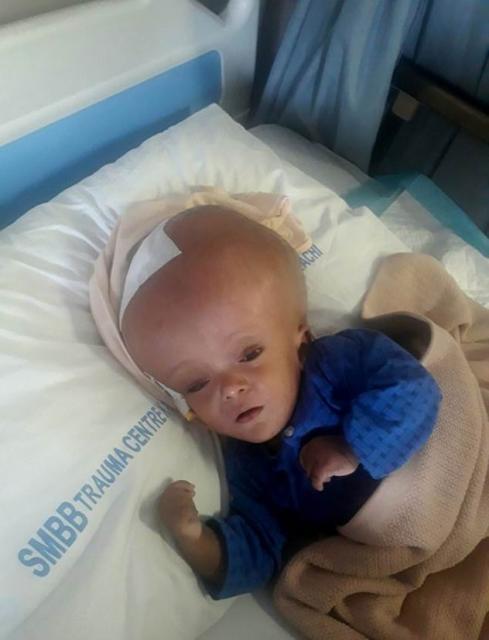
Muhammad Sanaullah, a 15-month-old Pakistani boy from the city of Badin in the province of Sindh, suffers from a rare condition known as hydrocephalus. This condition is characterized by an excessive accumulation of fluid inside the skull, causing Sanaullah's head to grow abnormally large. As a result, the little boy is unable to move, eat, sleep, and is in desperate need of a life-saving operation.
A Family's Hope
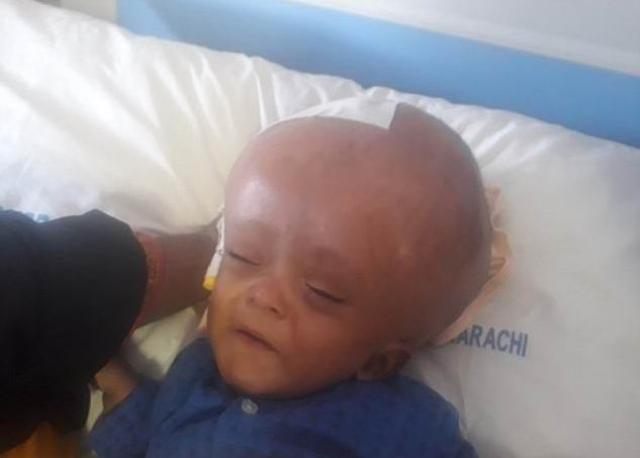
Sanaullah's parents express concern for their son's future, as they claim that he is mistreated by others in their community. Despite his fragile health, they remain optimistic, hoping that their son, currently battling a chest infection, will one day fully recover. One of the parents stated, "We rely on the fact that the Lord hears our prayers, so our son's illness will be cured."
A Joy Turned Into Despair
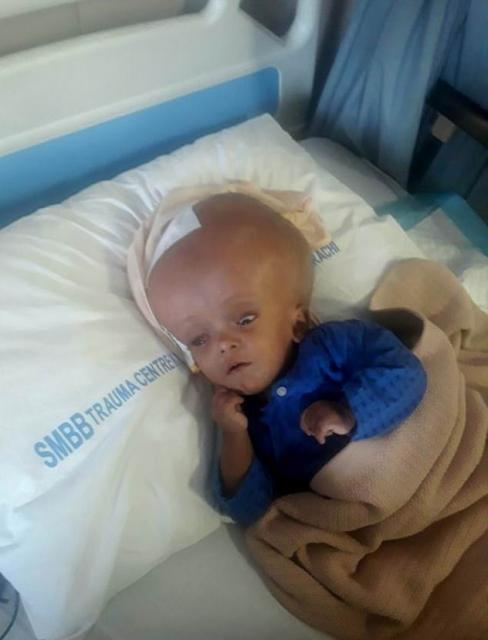
Sanaullah's mother, 39-year-old Kiran Shedi, who also has four daughters, recalls the initial happiness she felt when her son was born. "We were so happy that, after 18 years of marriage, God finally blessed us with a son." However, their joy was short-lived. Just a few weeks after his birth, Sanaullah's head began to grow at an alarming rate. He was constantly crying and unable to sleep properly.

Desperate Measures
The family brought him to a hospital in Badin, where doctors advised them to seek medical help in Karachi. They were warned that any delay could cost their child's life. Desperate and determined, the parents took Sanaullah to Karachi, where he underwent a shunt operation to redirect excess fluid from his head to other parts of his body.
A Struggle for Survival
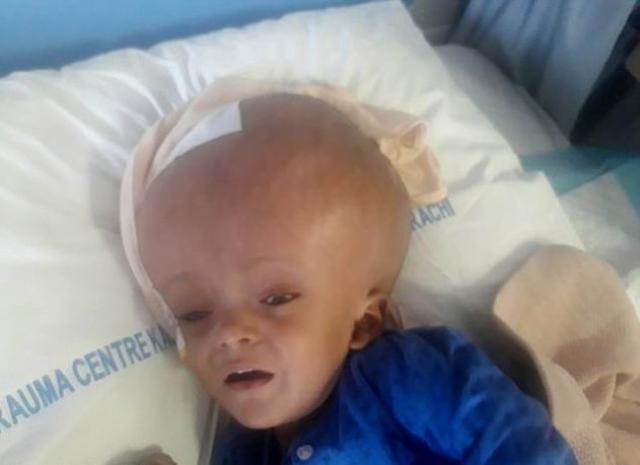
In December 2017, Sanaullah's condition worsened, and his parents had to make the journey back to Karachi. His father, 44-year-old Muhammad Mumtaz Shedi, who manages a small grocery store and earns less than 380 rubles per day, said, "My son's health condition remained stable until last month when his head began to swell again." The parents hoped for another surgery, but after several tests, the doctors discovered that Sanaullah had also developed a chest infection. Therefore, the infection must be treated before any major surgery can take place.
Hydrocephalus and Treatment Options
Hydrocephalus, also known as "water on the brain," is characterized by the accumulation of cerebrospinal fluid in the brain's ventricular system. In addition to abnormal head size, symptoms may include headaches, nausea, vomiting, confusion, and vision problems. The causes of hydrocephalus are often unknown, but can be related to issues with the brain's ventricles or other serious health conditions affecting blood flow, such as heart diseases. Traumatic brain injury, stroke, or tumors can also lead to hydrocephalus.
The standard treatment for hydrocephalus is shunt surgery, which involves inserting a thin tube into the brain to drain excess fluid into another part of the body, where it can be absorbed into the bloodstream. Without treatment, hydrocephalus can be fatal, as increased pressure compresses the brainstem responsible for regulating heart rate and breathing.
The prognosis after surgery varies depending on the patient's age and overall condition.