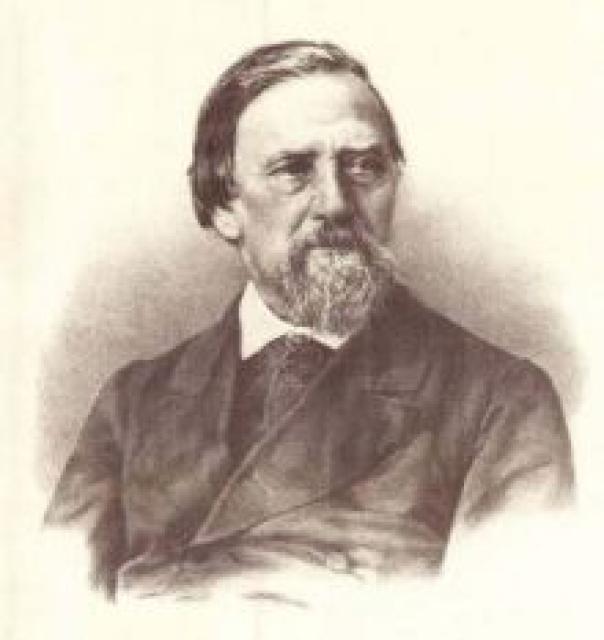
Napoleon Orda
 Poland
- Biography of Napoleon Orda
- Life in Paris
- Director of the Italian Opera
- Later Years and Contributions
- Works and Legacy
Biography of Napoleon Orda
Napoleon Orda was a Belarusian and Polish writer, composer, musician, and artist. He was born in the town of Swisłocz and completed his education at Vilnius University, where he studied mathematics. Orda became involved in illegal student societies and was arrested for his participation. He was awarded the Virtuti Militari Order for his involvement in the 1831 uprising.
Life in Paris
After the suppression of the uprising in 1833, Orda settled in Paris, where he befriended Frederic Chopin and took composition and piano lessons from him and Franz Liszt. He also began studying drawing and focused on capturing landscapes, especially city views, during his travels to France, Austria, Scotland, Belgium, the Netherlands, Spain, Portugal, and North Africa.
Director of the Italian Opera
In 1847, Orda became the director of the Italian Opera in Paris until its closure during the revolution in 1848. He actively participated in the activities of the Polish Great Emigration. After Tsar Alexander II declared amnesty for uprising participants in 1856, Orda returned to his homeland.
Later Years and Contributions
In 1862, Orda settled in Ukraine in the house of General Adam Żurowski. From 1872 onwards, he systematically documented notable places in Volhynia during his annual summer travels. He also captured the landscapes of Belarus, Lithuania, Samogitia, Livonia, Galicia, Eastern Prussia, and the Kingdom of Poland. As a composer, Orda created polonaises, mazurkas, waltzes, and nocturnes.
Works and Legacy
Orda compiled "Grammaire analitique et pratique de la langue polonaise a l’usage des Français" (Paris, 1856; Warsaw, 1858, revised edition - Warsaw, 1874). He also published the "Album dziel kompozytorów polskich" (1838) and "Gramatyka muzyki" (Warsaw, 1873). Additionally, Orda created an album of views depicting the provinces of Grodno, Vilnius, Minsk, Kaunas, Volhynia, Podolia, and Kiev, which he collected during his travels.
Orda's name is immortalized in Minsk, where a street bears his name. His work as an artist is featured on the largest Belarusian banknote, the 100,000 ruble note. A monument to Orda, created by sculptor Golubev, is also installed in Ivanovo, Brest Region, Belarus.


