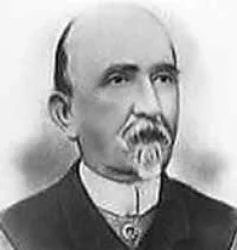
Natalia Zabila
- From Saint Petersburg to Ukraine
- Finding a voice for young readers
- Editor and literary mentor
- A lasting children’s literature legacy
Natalia Zabila became one of the most beloved writers for Ukrainian children, known for lively poems, fairy tales and stories that bring everyday life into a child’s reach. Her work ranged from playful verses about animals and family routines to imaginative retellings of history. She also translated major Russian poets into Ukrainian and helped shape children’s publishing as an editor and literary organizer.
From Saint Petersburg to Ukraine
Zabila was born in Saint Petersburg on 5 March 1903 into a family with deep Ukrainian roots. In 1917, she moved with her mother to Liubotyn, near Kharkiv, at a time when revolution and political upheaval were transforming the region. She studied history at the Kharkiv Institute of People’s Education, graduating in 1925, and worked first as a teacher. The classroom gave her direct experience of children’s everyday speech, questions and imaginations.
She began publishing in 1924. Her early poetry showed modernist influences, but Soviet political pressure pushed her away from that style. She published poetry and prose for adults as well as children, and in 1930 turned fully to literary work. Over time, writing for young readers became the center of her career.
Finding a voice for young readers
Zabila’s first major children’s books appeared in the late 1920s and early 1930s. A poetic story, *About a Little Monkey*, published in 1928, helped establish her direction. Her best-known collection, *Yasochka’s Book* (1934), follows a young girl through small adventures and familiar routines. The poems combine a child’s point of view with a playful rhythm and clear, vivid language.
Her writing for children often drew on folk storytelling, warm humor and close observation of animals, plants and home life. Books such as *Happy Youngsters* and *About Grandmother’s Tales* helped her reach generations of readers. She also wrote for the stage, producing the fantasy play *The First Step* and the dramatic poem *The Children of Troy*, which imagined early human life and the founding of Kyiv through a child-friendly historical lens.
Zabila’s work as a translator broadened the literary world available to Ukrainian readers. She rendered works by Aleksandr Pushkin, Mikhail Lermontov and Nikolai Nekrasov into Ukrainian, alongside poems by other Russian authors. She also made a verse retelling of the medieval epic *The Tale of Ihor’s Campaign*, published as *The Tale of Ihor’s Campaign* in 1940.
Editor and literary mentor
Beyond her books, Zabila worked in the editorial offices of journals and children’s publications. For a time, she edited the periodical *Barvinok*, and she took part in writers’ organizations and literary initiatives focused on children’s books. These roles gave her influence over what young readers could encounter in print, while her own stories demonstrated how serious craft could coexist with humor and accessibility.
Her writing was collected in a four-volume edition published in 1971–73. She received the Lesya Ukrainka Literary Prize in 1972 for works including *The First Step* and *The Children of Troy*. Her work was translated into numerous languages, extending her reach beyond Ukraine.
A lasting children’s literature legacy
Natalia Zabila died in Kyiv on 6 February 1985. Her legacy lives most strongly in the books that speak directly to children: rhythmic poems, memorable characters and stories rooted in familiar experiences. Her career also reveals the pressures writers faced under Soviet rule and the creative ways she continued to write within that environment. By giving Ukrainian children literature in their own language that was imaginative, musical and close to everyday life, Zabila helped shape a lasting tradition.