Nebra
Nebra, also read as Raneb, was one of the earliest Egyptian kings to place the sun god Ra within his royal name. He ruled during the Second Dynasty, when Egypt’s kingship and religious traditions were still taking shape. The surviving evidence offers only brief glimpses of his reign, but it includes a striking royal stela and traces of expeditions beyond the Nile Valley.
A king known through fragments
Nebra’s exact dates are uncertain, as they are for many rulers of Egypt’s Early Dynastic Period. He probably ruled in the late 29th century BCE, after Hotepsekhemwy and before Nynetjer. Later king lists and archaeological finds support this general sequence, although the chronology of the Second Dynasty remains debated.
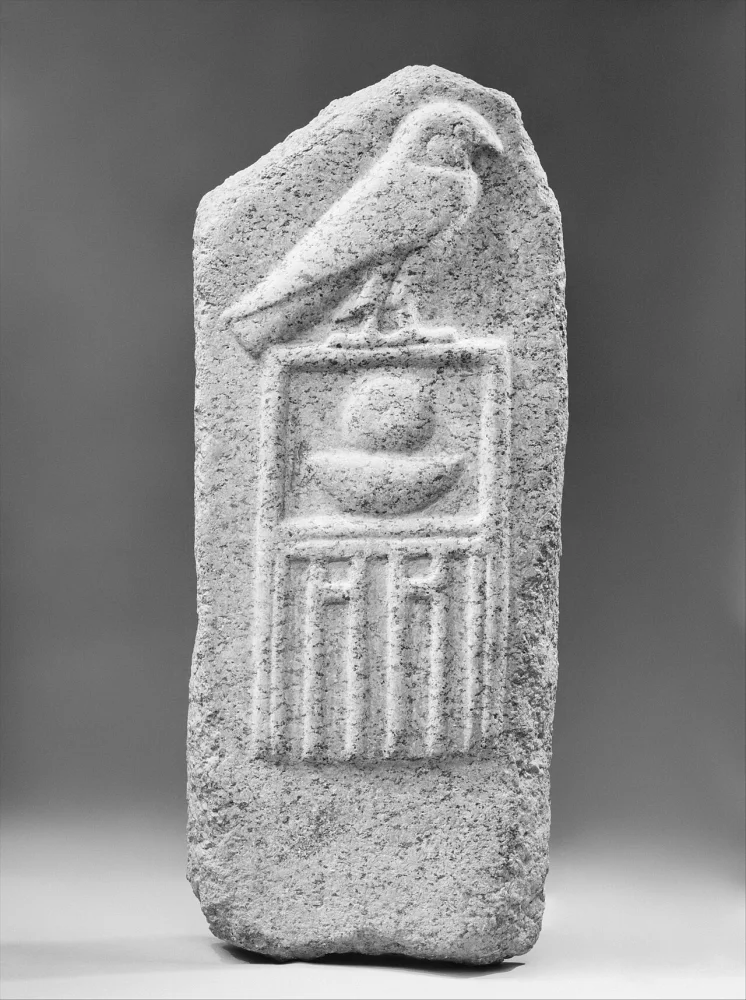
The name Nebra is also commonly rendered Raneb. It is his Horus name, written inside a serekh, the palace-shaped frame used to identify early kings and topped by the falcon of Horus. The name’s reading is debated: it may mean “Ra is my lord” or “Lord of the Sun.” Either way, it is an early and notable use of Ra in a royal name, at a time when Horus remained central to royal identity.
The best-known object associated with him is a stone stela now in the Metropolitan Museum of Art. It bears his name and is thought to have come from the Memphite region. Other sealings and inscribed objects help place him among the early rulers of the dynasty. Records bearing his name in the Sinai suggest that Egyptian expeditions continued to travel beyond the Nile Valley, likely in pursuit of resources such as copper and turquoise.
The limits of the record
No surviving contemporary narrative tells the story of Nebra’s reign. Historians reconstruct his place in the royal sequence from inscribed artifacts, later king lists and the archaeological context in which objects were found. This leaves little basis for detailed claims about his wars, family or court.
His burial place is also uncertain. Seal impressions with his name have been found in royal galleries at Saqqara, leading some Egyptologists to suggest that he was buried in the area. The objects could have reached the galleries through later reuse, however, and no tomb has been securely identified as his.
A small but lasting trace
Nebra’s reign is important less for a well-documented political story than for what his name reveals about early Egyptian kingship. The combination of Ra and Horus in royal titulary hints at the evolving religious language of rule. His surviving stela also shows how carefully the king’s identity was represented, with his name enclosed in the sign of the royal palace beneath Horus’s falcon.
The evidence is fragmentary, but Nebra remains a recognizable figure from a formative period in Egyptian history. His name has endured on objects separated from their original settings by millennia, preserving a small record of a king whose reign otherwise remains largely beyond view.


