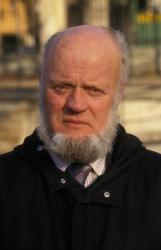
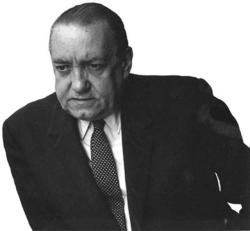
Nickos Kazandzakis
 Greece
- Nikos Kazantzakis: A Titan of Literature
- Political Engagements
- International Travels and Perspectives
- Literary Legacy
- International Acclaim
Nikos Kazantzakis: A Titan of Literature
Early Life and InfluencesNikos Kazantzakis was born on February 18, 1883, in Heraklion, Crete, Greece. Educated at the University of Athens, he went to Paris and came under the influence of Henri Bergson's philosophy of "vital impulse" and Friedrich Nietzsche's concept of the "will to power." These principles formed the foundation of his worldview.
Political Engagements
Kazantzakis believed that life's purpose was to transcend the physical and embrace the spiritual. He identified "saviors" such as Buddha, Lenin, Dante, Ulysses, and Christ as figures who exemplified this transformation. Greece's tumultuous political landscape provided opportunities to test his ideals. He witnessed the Cretan rebellion against the Turks in 1897 and served in the Greek army during the First Balkan War. Later, he held various government positions, including General Director of the Ministry of Social Welfare and Minister without Portfolio.
International Travels and Perspectives
Kazantzakis's activities extended far beyond Greece. He attended the 10th anniversary of the October Revolution in Moscow, interviewed Francisco Franco during the Spanish Civil War, and traveled extensively in China, Japan, Vienna, and Berlin. He studied intellectual life in England for the British Council and spent his last decade in France.
Literary Legacy
Kazantzakis's literary output was astounding in both quantity and quality. He wrote numerous plays, tercets, philosophical tracts, historical works, film scripts, and articles. His most significant achievement, however, was the epic poem "The Odyssey: A Modern Sequel" (1938).
International Acclaim
Kazantzakis gained worldwide recognition late in his life, when political and religious controversies led him to leave Greece. His novel "The Greek Zorba" (1943) established him as a major novelist. Subsequent works, including "Christ Recrucified" (1948), "Captain Michalis" (1950), "The Last Temptation of Christ" (1951), "Saint Francis" (1953), and his autobiography "Report to Greco" (1956), further cemented his reputation. Kazantzakis's novels were translated into all major European languages. He died in Freiburg, Germany, on October 26, 1957.