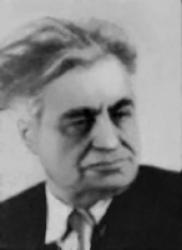
Nikola Vaptsarov
 Bulgaria
- Early Life and Education
- Maritime Career and Revolutionary Involvement
- A Turning Point: Accident and Political Activism
- Under Surveillance and Artistic Triumph
- Underground Resistance and Martyrdom
- Posthumous Recognition and Legacy
Early Life and Education
Nikola Vaptsarov was born into a revolutionary family in Bansko, Bulgaria. His father, Ivan (Yonko), was a national revolutionary. In 1924, Vaptsarov enrolled in a gymnasium in Razlog. In 1926, he joined the Maritime Technical College in Varna, graduating in 1932.
Maritime Career and Revolutionary Involvement
Vaptsarov worked on the ship "Burgas," visiting Istanbul, Alexandria, Beirut, and Port Said. Upon his return, he joined a factory and organized an amateur theater. He also became a member of the Bulgarian Communist Party (BKP).
A Turning Point: Accident and Political Activism
In 1936, Vaptsarov was fired from his factory after an accident. He moved to Sofia, working as a technician, stoker, and poet. He co-founded the Circle of Macedonian Poets (1938) and advocated for a Soviet-Bulgarian friendship treaty. These activities led to his arrest and exile to Godech.
Under Surveillance and Artistic Triumph
While in exile, Vaptsarov was required to report daily to the police, his correspondence was monitored, and he could not use a telephone. Despite these restrictions, he wrote his renowned poem "Peasant Chronicle," presented in court as evidence against him. His final line, "I am on my way to you through the spring fields," became iconic.
Underground Resistance and Martyrdom
Following the German invasion of the USSR, Vaptsarov joined the underground resistance. He conducted sabotage training, transported weapons, and organized safe houses while continuing to write anti-fascist works. Arrested on March 4, 1942, he was tortured and executed with 12 fellow anti-fascists on July 23.
Posthumous Recognition and Legacy
In 1952, Vaptsarov posthumously received the International Peace Prize. His poetry, marked by its passion, social consciousness, and lyrical beauty, continues to inspire and resonate with readers worldwide.