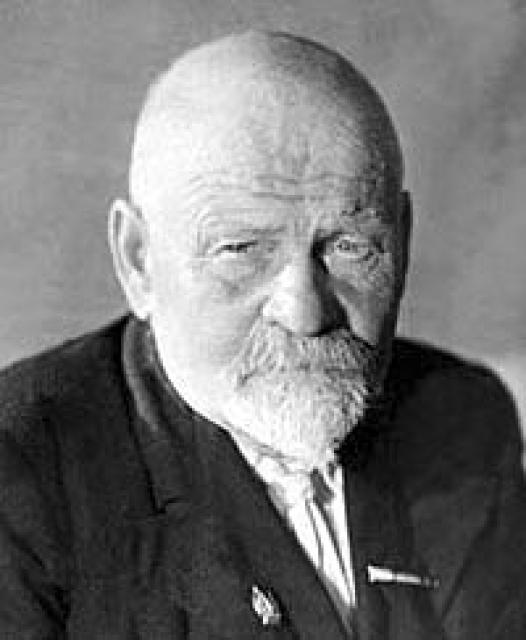
Nikolay Kell
- Nikolai Georgievich Kell
- Early Life and Education
- Kamchatka Expedition and Innovative Techniques
- Academic Career
- Contributions to Geodesy and Photogrammetry
- Legacy and Recognition
Nikolai Georgievich Kell
Born on January 20, 1883, in Petrovo, Pskov Governorate, Nikolai Georgievich Kell was a prominent Russian geodesist and a notable figure in the field of photogrammetry.
Early Life and Education
Growing up in a peasant family, Kell pursued his passion for geology at the St. Petersburg Mining Institute, where he enrolled in 1903. However, his studies were interrupted by his involvement in the 1908–1911 Kamchatka expedition of the Russian Geographical Society, where he conducted extensive geodetic surveys.
Kamchatka Expedition and Innovative Techniques
As a topographer for the expedition, Kell employed innovative mapping methods, including route triangulation and phototheodolite surveying. These techniques greatly simplified geodetic work without compromising its accuracy. His subsequent publication of the Atlas of Kamchatka Volcanoes in the late 1920s remains a valuable resource for scientists and explorers alike.
Academic Career
After graduating from St. Petersburg Mining Institute in 1915, Kell became a professor at the Ural Mining Institute in 1920, establishing its Geodesy Department. In 1923, he returned to Petrograd (now St. Petersburg) to head the Geodesy Department at the Leningrad Mining Institute, a position he held until 1953.
Contributions to Geodesy and Photogrammetry
Kell's research and publications significantly advanced the field of geodesy. In 1930, he published the first comprehensive practical manual for land surveyors, mine surveyors, and topographers. His patented stereo modulator (1936) facilitated the drawing of maps using phototriangulation. In 1947, he became the head of the Laboratory of Aeromethods for Geological Research of the USSR Academy of Sciences, a position he held until 1965. Under his leadership, the laboratory became a leading research institution, establishing scientific schools in remote sensing and photogrammetry.
Legacy and Recognition
Kell authored numerous textbooks and учебные пособия, his work has been recognized through prestigious awards, and he is commemorated by the naming of a volcano in Kamchatka and a mountain in Antarctica. His contributions to Russian geodesy and photogrammetry continue to shape the field today.




