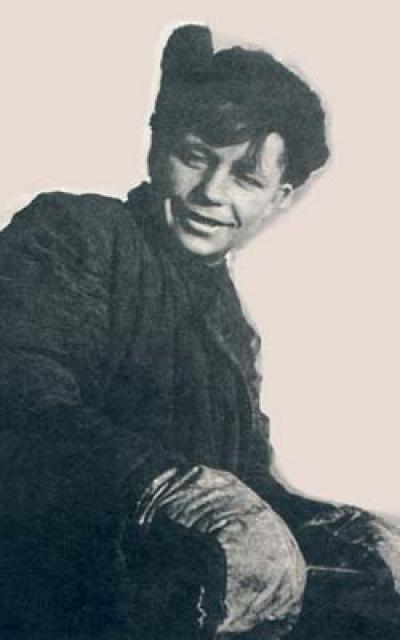
Nikolay Smetanin
- Early Life and Career Beginnings
- The Birth of the Stakhanovite Movement
- National Recognition and Leadership
- Career in High Office and the War Years
- Post-War Career and Legacy
Early Life and Career Beginnings
Nikolai Stepanovich Smetanin was born in March 1905 in St. Petersburg. The son of a janitor and a laundress, he faced poverty and hardship from an early age. At the age of 13, he was brought to work at the "Skorohod" shoe factory by his older sister, where he was tasked with distributing wooden shoe models.
Recognizing Smetanin's potential, the factory's chief engineer, nicknamed "Kryzhka," organized technical courses for the young workers. This opportunity allowed Smetanin to become a skilled hand-stitched footwear puller.
The Birth of the Stakhanovite Movement
In 1935, the Soviet Union launched the Stakhanovite movement, named after coal miner Alexei Stakhanov who set a record-breaking production quota. Smetanin embraced this initiative, driven by the promise of increased wages and a more comfortable life.
Smetanin set out to improve his productivity by optimizing his work process and relying on machine power. On his first day, he achieved an output of 1400 pairs of shoes, double his original target. His record-breaking performance drew national attention, and he became a symbol of the Stakhanovite movement in the leather and footwear industry.
National Recognition and Leadership
Smetanin's achievements earned him recognition and accolades. He was invited to address the All-Union Congress of Stakhanovites in Moscow, where he shared his insights on the importance of rationalizing labor processes and harnessing technology.
During the congress, Smetanin had the opportunity to meet with Joseph Stalin. This meeting further boosted his profile, and he was promoted several times within the "Skorohod" factory, eventually becoming its director.
Career in High Office and the War Years
As director, Smetanin faced challenges with coordinating supply chains and maintaining production quality. He relied on his connections and influence as a Stakhanovite and a member of the Supreme Soviet to overcome obstacles.
In 1940, Smetanin was appointed Deputy Minister of Light Industry of the USSR. However, he soon realized that high-level administration was not his forte and requested to be relieved of his duties.
When the Great Patriotic War broke out in 1941, Smetanin was denied his request to serve as a volunteer. Instead, he was appointed Deputy Chief of the Commissariat for Clothing and Equipment of the Red Army.
Post-War Career and Legacy
After the war, Smetanin held several factory management positions. He retired in 1961 and spent the rest of his life in relative obscurity. However, his contributions to the Stakhanovite movement and his role in the war effort left a lasting legacy in Soviet history.
Smetanin's story is a testament to the transformative power of the Stakhanovite movement, which motivated workers to strive for higher productivity and played a significant role in the Soviet Union's industrialization.