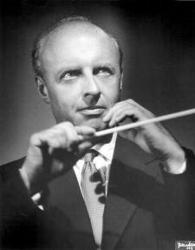
Nino Antonellini
 Italy
Nino Antonellini made his career in the musical life that connected Italy’s conservatories, radio studios and concert platforms. A specialist in choral singing, he spent decades training singers and shaping the sound of Rome’s RAI ensembles, then led one of Italy’s historic conservatories in Venice. His work ranged from the great polyphonic tradition to contemporary music, giving him a place in both the classroom and the broadcast archive.
Early Life and Musical Training
Antonellini was born in 1907 in Narzole, a town in Piedmont’s Cuneo province. He studied at the conservatories of Pesaro and Turin, where he specialized in choral singing. The surviving biographical record gives few details about his family or childhood, but his professional life shows a sustained focus on the craft of working with singers: shaping a large chorus into a responsive ensemble, attentive to words, balance and musical line.
Teaching and the RAI Years
In 1950, Antonellini became a professor at Rome’s Conservatory of Santa Cecilia, where he taught choral singing for two decades. Two years later, he took charge of the RAI Symphony Chorus in Rome, a position that placed him at the heart of Italy’s national broadcasting music operation. Radio brought choral and orchestral performances into homes across the country, and the chorus could move between the demands of concert repertoire and the precision required in a studio.
Antonellini’s work with RAI developed beyond the symphonic chorus. In 1965 he founded the broadcaster’s chamber choir, creating a smaller ensemble suited to music requiring a more intimate vocal blend. He remained associated with the group in the following years; archival recordings place him at the podium for works including Luigi Nono’s experimental *Contrappunto dialettico alla mente*. His repertoire also reached back to Renaissance composers such as Palestrina, Gesualdo, Gabrieli and Monteverdi. That breadth reflected a conductor comfortable moving between old polyphony and the modern sounds emerging in postwar Italy.
Leading the Venice Conservatory
After his long Roman teaching career, Antonellini became director of the Benedetto Marcello Conservatory in Venice, serving from 1970 to 1973. The appointment brought a new institutional responsibility: alongside conducting and teaching, he was now guiding a major center for musical study. He held that post during a period when Italy’s conservatories were central to the training of performers, composers and music educators.
His work left a personal trace in his native region as well. The Corale Polifonica Antonellini of Narzole took its name in recognition of the musician’s connection to the town and his standing as a choral specialist. The ensemble’s later use of his name reflects the way his reputation reached beyond the national broadcaster and conservatory offices.
Legacy
Antonellini died in Rome in 1994. His career is documented less through public celebrity than through the institutions and ensembles he served: Santa Cecilia, RAI’s Rome chorus and chamber choir, and the Venice conservatory. As a teacher and conductor, he helped connect Italy’s deep choral heritage with the possibilities of radio and contemporary composition. The recordings preserve the most vivid evidence of his musical world—a conductor leading singers through music that could be centuries old or strikingly new.