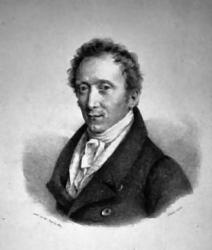
Noy Jordania
 Georgia
Biography of Noe Zhordania
Noe Zhordania was a Georgian political figure and journalist who served as the leader of the Georgian Mensheviks. Born on March 9, 1869, in the village of Lanchkuti, Kutaisi Governorate, he came from a noble family. Zhordania attended the Tiflis Spiritual Seminary and later studied at the Warsaw Veterinary Institute.
He began his revolutionary activities in workers' circles in Tiflis and led the legal Marxists in the "Mesame Dasi" (the Third Group) from 1893 to 1898. In 1894, he faced trial for his involvement in the "League of Freedom of Georgia". Zhordania became a delegate to the 2nd Congress of the Russian Social Democratic Labor Party (RSDLP) in 1903 and joined the Mensheviks. He served as the editor of the Menshevik newspaper "Social-Democrat" (Tiflis, in the Georgian language) in 1905, where he expressed his opposition to the Bolsheviks.
During the 1905-1907 Revolution, Zhordania opposed armed uprisings and supported the creation of a legal workers' party. He advocated for the municipalization of land at the 4th Congress of the RSDLP in 1906. In the same year, he was elected to the 1st State Duma as a representative of Tiflis and became the leader of the Social-Democratic faction. Zhordania was elected to the Central Committee (CC) of the RSDLP at the 5th Congress in 1907 and remained a member until 1912. He was sentenced to three months in prison in December 1907 for signing the Vyborg Manifesto, which led to the loss of his voting rights.
In 1912, Zhordania led the legal Menshevik newspaper "Nashe Slovo" in Baku. He collaborated with L.D. Trotsky in the journal "Borba" in 1914 and published several articles on the national question. During World War I, he took a "defensive" position and participated in the Plekhanov anthology "Self-Defense" (1916). After the February Revolution in 1917, he became the chairman of the Tiflis Soviet Council and was elected as a commissioner of the executive committee. In June 1917, during the growing influence of the Bolsheviks in the army, Zhordania called for the unity of the Mensheviks and the Socialist Revolutionaries to fight against the Bolsheviks at a meeting of the military sections of the executive committees.
At the All-Union Congress of the RSDLP in August, Zhordania was elected as a candidate member of the CC of the Russian Social Democratic Labor Party (Bolsheviks). On September 3, 1917, at a meeting of the Tiflis Soviet Council, he urged the working class not to succumb to Bolshevik sentiments but to fight for the creation of a parliamentary republic. He was a delegate to the Democratic Conference in September 1917 and one of the leaders of the Menshevik faction. In October 1917, he participated in the Pre-Parliament but returned to Georgia after realizing that it would not fulfill their hopes. On November 11, 1917, at a meeting of national parties, Zhordania delivered a speech emphasizing the need for a government that would lead to a Constituent Assembly or the formation of a central authority. On November 20, during the 1st National Congress of Georgia, in which all parties except the Bolsheviks participated, he demanded full self-government for Georgia. On November 26, 1917, he became the head of the Presidium of the National Council of Georgia.
At the meeting of the members of the Constituent Assembly from the Transcaucasus and the Caucasian Army in January 1918, Zhordania proposed convening the Transcaucasian Sejm to "organize locally in all regions and, through the union of organized regions, exert pressure on the center and establish state power" (Mentesashvili A.M. October Revolution and the National Liberation Movement in Georgia. 1917-1921. - Tbilisi, 1987, p. 72). In one of the early sessions of the Sejm (February 15), he read the declaration of the Mensheviks, which stated that the current revolution does not go beyond the limits of the commodity economy and does not affect the foundations of bourgeois society. Despite the dissolution of the Transcaucasian Democratic Federative Republic and the dissolution of the Transcaucasian Sejm on May 26, 1918, Zhordania effectively led the Temporary Parliament of the Georgian Democratic Republic. In the face of the invasion of Turkish troops, Zhordania decided to rely on Germany and invited German forces to Georgia.
On July 24, 1918, Noe Zhordania became the head of the government of Georgia. On September 8 of the same year, he was presented with the highest German military order for his assistance to the German occupation authorities. After the defeat of Germany and the arrival of British troops in Georgia, N.N. Zhordania gained the trust of the British interventionists by his opposition to Bolshevism. In June 1919, he reached an agreement with A.I. Denikin for joint action against the Bolsheviks. On January 14, 1920, in a speech at the Constituent Assembly of Georgia, he firmly rejected a military alliance with Soviet Russia, preferring Western imperialists to Eastern fanatics. In the spring of 1920, Zhordania was one of the initiators of the Georgian-Russian Treaty (signed on May 7), which established normal diplomatic relations between the two countries. He later expressed his support for the recognition of Soviet Russia by the Entente during negotiations with the British representative, believing that the recognition of Georgia's independence by Soviet Russia would open the way to international recognition of Georgia.
After the establishment of Soviet power in Georgia in March 1921, Noe Zhordania emigrated to France. He participated in the preparation of the Menshevik uprising in Georgia in 1924. He died in exile in 1953.