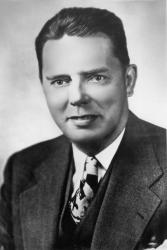
Oliver Sacks
 USA
USAEarly Life and Education
Oliver Sacks was born in 1933 in London, England, to a Jewish family. His parents, Muriel Elsie Landau and Samuel Eliezer Sacks, were both physicians. He was the youngest of four children and had several notable cousins, including Israeli Foreign Minister Abba Eban, actor and director Jonathan Lynn, and mathematician Robert Aumann. His father's family originated from Lithuania, while his mother's was from Belarus.
Sacks earned his medical degree from Oxford University in 1958. He moved to Canada and then to the United States in 1960. He became a naturalized American citizen in 1965.
Medical Career
Sacks was a neurologist and neuropsychologist. He was a professor of neurology at the Albert Einstein College of Medicine and an adjunct professor of neurology at the New York University School of Medicine. He also maintained a private medical practice in New York City. Despite being diagnosed with prosopagnosia, a condition that impaired his ability to recognize faces, Sacks continued to practice medicine and write.
Writings
Sacks is known for his popular books that describe the clinical histories of his patients. He wrote in the tradition of 19th-century "clinical tales." His books focus on the experiences and emotions of his patients, aiming to help readers understand their often traumatic or unusual conditions. Some of his most famous works include "Awakenings" (1973), "The Man Who Mistook His Wife for a Hat" (1985), and "An Anthropologist on Mars" (1995).
Personal Life
Sacks lived a solitary existence for much of his life and maintained a celibate lifestyle. In his 2015 autobiography, "On the Move: A Life," he revealed his homosexuality for the first time. In 2008, he began a romantic relationship with New York Times columnist Billy Hayes.
Later Years and Legacy
In 2015, Sacks was diagnosed with terminal uveal melanoma, a type of eye cancer. He announced his illness in a New York Times article that ended with a poignant reflection on his life. He expressed gratitude for the love and opportunities he had experienced, emphasizing the privilege of having been able to think, feel, and contribute to the world. Sacks passed away peacefully at his Manhattan home in 2015 at the age of 82, surrounded by loved ones.
Sacks's writings continue to be widely read and appreciated for their insights into human nature, empathy, and the power of the human spirit. His work has had a profound impact on the fields of neurology, medicine, and literature, and his legacy as a brilliant writer and compassionate physician will continue to inspire generations to come.