Olivia Serres
 Great Britain
- Biography of Olivia Serres
- Talent in Painting
- Marital Issues and Divorce
- Pursuit of Art and Literature
- Controversial Claims and Imprisonment
- Exposed and Later Life
Biography of Olivia Serres
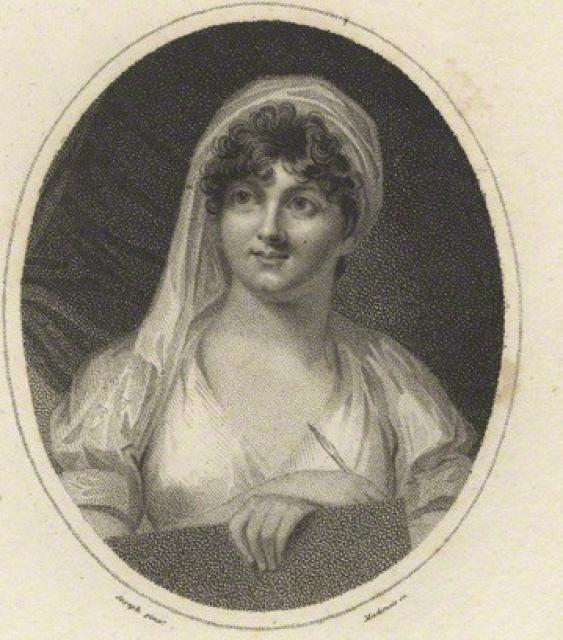
Olivia Serres was a British artist and writer who claimed to be of noble descent. Born on April 3, 1772, in Warwick, she was the daughter of Robert Wilmot. At the age of ten, she was sent to live with and be educated by her uncle, James Wilmot. In 1789, she returned to London to live with her father.
Talent in Painting
Olivia had a true talent for painting, which she developed under the guidance of marine artist John Thomas Serres. John was known for creating paintings for George III. In 1791, Olivia and John got married, and they had two daughters together. Olivia's paintings were exhibited at the Royal Academy of Arts and the British Institution, but they did not bring her much financial success.
Marital Issues and Divorce
The marriage between Olivia and John began to deteriorate when John discovered his wife's infidelity during his absences. Additionally, Olivia was dissatisfied with the financial support she received from John, as he only gave her £200 per year for her expenses. Before their divorce in 1804, Olivia gave birth to a son from her relationship with artist George Fields. After leaving John, she lived with George for some time.
Pursuit of Art and Literature
After her divorce, Olivia dedicated herself to painting and writing. She started writing a novel, poems, and memoirs about her uncle, Dr. James Wilmot. In her last work, she attempted to prove that her uncle was the author of the collection of letters known as the "Letters of Junius." In 1817, Olivia wrote a letter to the Prince Regent claiming to be the illegitimate daughter of Prince Henry, Duke of Cumberland, from her aunt Olive Payne.
Controversial Claims and Imprisonment
In 1820, after the deaths of her father, uncle, and King George III, Olivia changed her story. According to her "revised history," James Wilmot had secretly married Princess Poniatowski, sister of Stanislaus I, the King of Poland. Their daughter married the Duke of Cumberland in 1767, and Olivia was their only child. She claimed that King George III granted her £5000 and an annual pension of £500 for life after learning about her true lineage. She also alleged support from the King of Poland and was bestowed the title of Duchess of Lancaster by King George III in May 1773. She received the title of Princess Olivia Cumberland from George IV, along with a royal coat of arms for her carriage and royal liveries for her servants.
Olivia supported her claims with various documents and her physical resemblance to her alleged father. In 1821, she even "re-baptized" herself as the daughter of the Duke of Cumberland in Islington Church and spread the word about her lineage through newspapers, pamphlets, and letters. However, in the same year, Olivia was imprisoned for her debts. Posters proclaiming "Princess Cumberland in captivity!" were displayed throughout London, and more details about her fabricated history were published a year later.
Exposed and Later Life
In 1823, Sir Robert Peel, the Home Secretary at the time, announced the results of an investigation that revealed all of Olivia's documents were forged, and her story was entirely fictional. Despite this exposure, Olivia managed to avoid prosecution. She continued to struggle with debts and spent time in prison several more times until her death on November 21, 1834. She left behind two daughters.