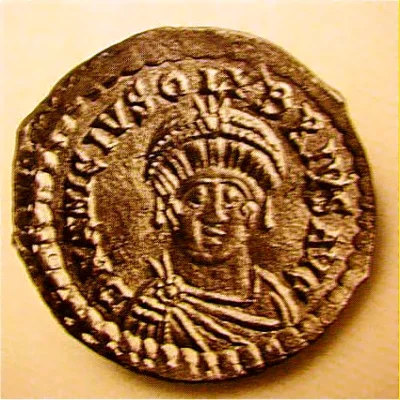
Olybrius
Anicius Olybrius held the Western Roman throne for only a few months in 472, during one of the final and most turbulent years of the empire in the West. His aristocratic Roman background and marriage to Placidia, a daughter of the emperor Valentinian III, gave him a striking dynastic profile. Yet real power rested with military strongmen, and his brief reign unfolded amid a violent struggle between the general Ricimer and Emperor Anthemius.
An aristocratic Roman
Olybrius belonged to the wealthy Anician family, one of Rome’s most distinguished senatorial houses. He was in Constantinople after the Vandal sack of Rome in 455, when the city’s fall scattered members of its political elite. He later married Placidia, daughter of Valentinian III and Licinia Eudoxia. The marriage connected him to the Theodosian imperial dynasty; through Placidia’s sister, who married the Vandal prince Huneric, it also tied him to the rulers of North Africa.
Olybrius served as consul in 464, a prestigious office that underscored his standing in Roman public life. He was also a possible candidate for the Western throne in earlier succession disputes, with support attributed to the Vandal king Geiseric. These connections made him a plausible claimant, but also left his political loyalties open to suspicion.
A throne amid civil war
In 472, the conflict between Anthemius and Ricimer, the powerful commander who had helped place emperors on the Western throne, erupted into open war. Olybrius came to Italy from Constantinople during the crisis. Accounts differ on whether the Eastern emperor Leo I sent him to mediate or whether Ricimer had already chosen him as a replacement for Anthemius.
Ricimer’s forces besieged Rome, and Anthemius was killed. Olybrius then ruled as Western emperor, but his authority depended on the same military power that had brought him to the throne. During the brief reign, he appointed Ricimer’s nephew Gundobad to the rank of patrician. Ricimer himself died soon afterward, leaving the emperor with little time to establish an independent position.
Family and final months
Olybrius and Placidia had a daughter, Juliana, who later married the senator Areobindus. Olybrius died in 472, only months after becoming emperor. The exact date and medical cause are uncertain; contemporary accounts indicate that he died a natural death, while later writers proposed an illness.
A fleeting legacy
Olybrius left little evidence of a distinct governing program. His reign is remembered chiefly as one episode in the rapid turnover of Western emperors during the empire’s final years. He brought an old Roman family and a powerful imperial marriage to the throne, but his short tenure could not overcome the military rivalries that controlled the politics of the day.




