Onan
Onan is a figure in the Book of Genesis, remembered through a brief but consequential episode in the family story of Judah and Tamar. Genesis identifies him as Judah’s second son, born to the daughter of Shua, and places his story in a period before the people of Israel became a nation. The text gives no birth date or independent historical record, so his life is known through biblical narrative and its long history of interpretation.
The Duty to Tamar
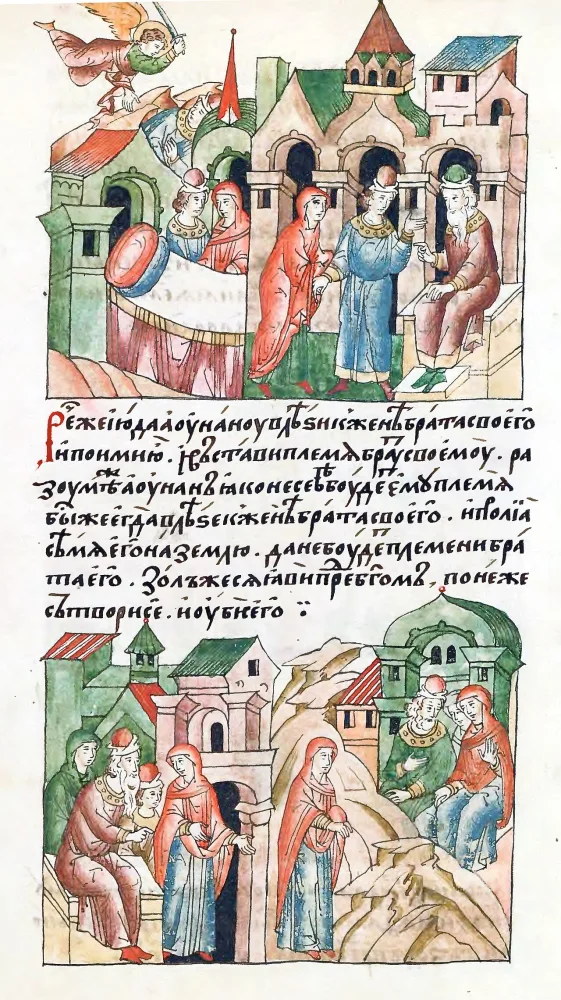
According to Genesis 38, Judah’s eldest son, Er, married Tamar and died without an heir. Judah then told Onan to fulfill the duty of a brother-in-law by having a child with Tamar, so that the deceased brother’s family line would continue. This resembles the later levirate custom described in Deuteronomy, in which a man’s brother was expected to marry his childless widow and preserve the dead man’s name and inheritance.
Onan knew that a child born from the union would be counted as Er’s heir, not his own. The passage says he repeatedly prevented Tamar from conceiving. The narrative presents this as a deliberate refusal to provide an heir and a failure of family obligation; it says God judged his conduct as wicked and caused his death. Judah then sent Tamar back to her father’s household, promising her his youngest son, Shelah, when he was old enough.
A Story of Power and Family Lineage
The episode is not simply a tale about Onan. It also reveals Tamar’s vulnerability: as a childless widow, she depended on Judah’s household to secure her future and preserve her place in the family. When Judah failed to give her Shelah, Tamar devised a plan that led to her pregnancy by Judah. Once the truth emerged, Judah acknowledged that she had been more righteous than he was. Tamar gave birth to twins, Perez and Zerah, and the narrative continues the line through Perez.
Genesis 38 stands between episodes of the Joseph story and turns attention to Judah’s family. Readers and scholars have interpreted its placement and purpose in different ways, including as a narrative about responsibility, inheritance, and the development of Judah’s character. Onan is therefore often read in relation to Tamar’s eventual vindication and Judah’s recognition of his own failure.
A Name with a Later Meaning
Over centuries, Onan’s name gave rise to the word “onanism,” commonly used for masturbation. That later meaning does not closely match the action described in Genesis, where Onan is having sex with Tamar but avoiding conception. Many modern biblical scholars understand the episode’s central offense as his refusal to fulfill the obligation to provide an heir for his dead brother. The story has nonetheless played a significant role in Jewish and Christian moral debates about sexuality and reproduction.
Onan’s remembered legacy is unusually large for a character who appears only briefly. His story has shaped interpretations of ancient family duties, the social position of widows, and the relationship between sexual conduct and inheritance. The gap between the Genesis narrative and the later meaning of his name also makes him a striking example of how religious texts acquire new meanings as they pass through generations of readers.