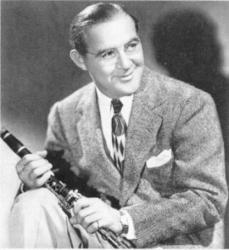
Oscar Gareissen
 USA
Oscar Gareissen carried a career in music from the Gulf Coast to Rochester, where he became a teacher, church musician and influential choral leader. Born in Monterrey, Mexico, on June 6, 1866, he made his professional life in the United States and became known for bringing singers together around ambitious repertoire.
Early Career in Galveston
By the 1890s, Gareissen was working in Galveston, Texas, as a teacher of voice culture and a musical director. He led the Galveston Quartette Society, a substantial local organization with dozens of active singers and a wider circle of honorary members. The work gave him a prominent place in the city’s musical life and combined vocal instruction with the practical demands of preparing an ensemble for public performance.
Building a Musical Institution in Rochester
Gareissen later moved into Rochester’s expanding music community. In the early 1910s, he joined pianist Alf Klingenberg and musician Hermann Dossenbach in developing a music school. The partnership took shape as the D.K.G. Institute of Musical Art, named for its founders. Its history was closely tied to Rochester’s larger ambition to establish a first-rate center for musical training.
The institute was reorganized in 1914 with Gareissen as a partner, and it later consolidated with the Rochester Conservatory of Music. George Eastman purchased the school in 1918 and transferred it to the University of Rochester the following year. That institution became the foundation for the Eastman School of Music, which opened in 1921. Gareissen’s role placed him among the educators who helped make Rochester’s new school possible, even though he did not live to see its first classes.
Alongside his teaching, Gareissen served as director of the Brick Church choir. In 1914 he organized Rochester’s Festival Chorus, bringing church singers and musical amateurs into a large ensemble. The chorus performed with the Rochester Orchestra and gained a reputation for its high standard. Gareissen also taught voice at the Eastman School and was described by the music press as a nationally prominent teacher and a sought-after lecturer.
A Final Performance
Gareissen died in Rochester on December 9, 1924, aged 58, after suffering a heart attack at his studio. He had been coaching the Festival Chorus for a performance of Handel’s “Messiah” at the Eastman Theatre, scheduled for December 11. The concert went ahead, while memorial services were held at Eastman’s Kilbourn Hall and the school closed for the occasion.
His career joined the intimate work of voice teaching with institution-building and large-scale choral music. From Galveston’s singing societies to Rochester’s Festival Chorus and the school that became Eastman, Gareissen helped shape the musical communities around him.