Oswaldo Guayasamin
 Ecuador
Biography of Oswaldo Guayasamín
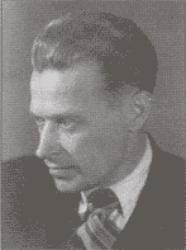
Oswaldo Guayasamín was an Ecuadorian artist, muralist, and sculptor, and a descendant of the Quechua indigenous people. He was a renowned master of 20th-century Latin American art, known for his murals, portraits, landscapes, and symbolic images in his paintings. Guayasamín was born into a poor family in the city of Quito, where poverty was a daily reality. He was the eldest of ten children, with an indigenous father and a mestizo mother. The surname Guayasamín translates from the Quechua dialect as "White Bird."
Despite performing poorly in school and attending several different schools, Guayasamín was only interested in drawing and playing the guitar. A significant milestone in Guayasamín's life was his education at the School of Fine Arts in Quito. He studied with enthusiasm and passion, graduating with honors in 1941. By 1942, he organized his first solo exhibition, which was successful, leading to an invitation to work in the United States.
Guayasamín divided his artistic career into two periods: "Me and the Indigenous People" and "Guakanyá" (which translates from Quechua as "Path of Tears"). The "Path of Tears" series, created over two years, consists of 103 paintings that depict the lives of indigenous people in Latin America. Guayasamín's graphic style, using artistic signs and a limited color palette, allowed him to work quickly. After a major exhibition in Quito in 1951, his paintings were displayed in many art centers around the world. In 1956, the series received an award in Spain.
Guayasamín frequently created portraits, which, despite their simplified style, were more realistic than the majority of his works. His portraits included political leader Fidel Castro of Cuba, Sasaki Guayasamín, Toti Rodríguez, Gabriela Mistral, and several self-portraits. Guayasamín gained recognition during his lifetime, with exhibitions held in capital cities worldwide. In 1983, his paintings were exhibited in Moscow and Leningrad at the Hermitage Museum, attracting an audience of one and a half million visitors.
Art critics have noted the influence of Mexican artists from the 20th century, such as Diego Rivera, Orozco, Siqueiros, and others, on Guayasamín's work. Guayasamín lived in Mexico, where he witnessed their murals and worked in José Clemente Orozco's workshop (1883-1949). However, the minor borrowings did not make Guayasamín a copier or an unsuccessful follower of Orozco. His individual style was built on the symbolic use of colors and images, the stylization of indigenous faces, and the deformation of artistic forms while maintaining their realistic origins. Hands often played a central role in Guayasamín's paintings and were more expressive than human faces. The artist suffered from racism, humiliation, and isolation as an indigenous person, which greatly influenced the themes of his artwork, portraying human suffering, blind despair, fear, oppression, and resistance to it.
Guayasamín's inclination towards symbols was also evident in his landscapes, where simplified forms of mountains, houses, and bodies of water prevailed, yet remained recognizable.
Guayasamín was an avid collector. After achieving financial independence and prosperity, he actively collected pre-Columbian indigenous ceramics, colonial period art (religious painting and sculpture), and works by artists closely associated with Spanish culture, such as Goya and Picasso. His valuable art collection was housed in his own Colonial-style home, which was augmented with a modern addition designed by Guayasamín himself, as he had an interest in architectural design and construction. However, his overwhelming focus on painting did not allow him much time for his architectural practice.
In 1978, the already renowned artist donated around 500 colonial period paintings and sculptures, pre-Columbian archaeological artifacts, and works by Goya and Picasso to the Ecuadorian government. The Guayasamín Museum was established, and the Guayasamín Foundation operates as well. In Quito, the Chapel of Humanity was built in simplified forms characteristic of the artist's style but using modular construction. The chapel exhibits some of Guayasamín's works. His works have been published numerous times in various international publications.