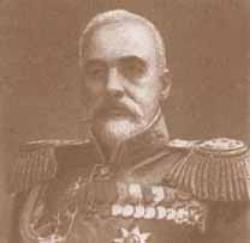
Otto Ciliax
 Germany
- Military Career in the Imperial German Navy
- Submarine Service in World War I
- 2nd Submarine Flotilla (October 15 – November 11, 1917)
- Commander, Submarine "UC-27" (September 24 – January 20, 1919)
- Naval Archive (July 12 – March 24, 1922)
- Advisor in the Fleet Department in Bremen (February 15 – March 20)
- On sick leave (March 24 – August 10)
- Commander of the torpedo boat "S-18" (March 30 – September 22, 1926)
- Senior Naval Officer in the Interwar Years
- Commanding Officer of Capital Ships
- Awards and Recognition
- Ciliax was mentioned in the "Wehrmachtbericht" on February 13, 1942.
Military Career in the Imperial German Navy
Otto Ciliax joined the Imperial German Navy as a cadet on April 1, 1910, beginning his training aboard the armored cruiser "Victoria Louise." He served there until March 31, 1911. On April 15, 1911, he was promoted to Ensign (Fähnrich zur See) and enrolled in the naval academy, where he studied from April 1, 1911, to September 30, 1912.
Submarine Service in World War I
Ciliax's next assignment was aboard the liner "Hannover" (October 1, 1912 – November 30, 1915), where he was promoted to Lieutenant (Leutnant zur See) on September 27, 1913. In December 1915, he completed a submarine training course and briefly served as watch officer on the destroyer "T-37" (January 2 – February 20, 1916). From February 21 to March 15, he participated in the acceptance trials of the new submarine "U-52." On March 16, he was appointed watch officer on this submarine and promoted to Senior Lieutenant (Oberleutnant zur See) on March 22.
During his service on "U-52" (until October 14, 1917), Ciliax was awarded the Iron Cross II and I Class. Following his submarine duty, he held various positions until the end of World War I:
2nd Submarine Flotilla (October 15 – November 11, 1917)
Submarine School (November 12 – December 5)2nd Submarine Flotilla (December 6 – June 23, 1918)
Commander, Submarine "UB-96" (June 24 – July 28)
Department for Acceptance of New Submarines (July 2 – August 10)
Submarine School (August 11 – 24)
Second Adjutant in the Submarine Inspection Department (August 25 – September 23)
Commander, Submarine "UC-27" (September 24 – January 20, 1919)
Submarine Surveillance Department (January 21 – March 14)Post-World War I Career
After the war, Ciliax commanded several destroyers in succession:
"T-92" and "T-107" (March 15 – November 30)
"T-181" (December 1 – January 18, 1920)
"T-140" and "T-145" (January 19 – December 31)
On June 29, 1920, he was promoted to Captain-Lieutenant (Kapitänleutnant).
Ciliax's subsequent career took place both ashore and aboard various naval vessels:
Staff of the Naval Base Command in the Baltic Sea (January 1, 1921 – July 11)
Naval Archive (July 12 – March 24, 1922)
Advisor in the Fleet Department in Hamburg (March 25 – January 31, 1923)
Advisor in the Fleet Department in Bremen (February 15 – March 20)
Instructor at the Naval Academy in Mürwik (March 21 – September 30)Commander of the destroyer "G-8," 1st Destroyer Flotilla (October 1 – March 23, 1924)
On sick leave (March 24 – August 10)
Organizational Department of the Naval Bases in the Baltic Sea (August 11 – March 29, 1925)
Commander of the torpedo boat "S-18" (March 30 – September 22, 1926)
Commander of the 1st Torpedo Boat Flotilla (September 23 – 26, 1928), after which he was promoted to Corvette Captain (Korvettenkapitän) on October 1.
Senior Naval Officer in the Interwar Years
Ciliax's career continued in senior staff roles:Advisor in the Naval High Command (October 1 – May 23, 1929)
First Staff Officer in the Command Staff of the Naval Forces in the Baltic Sea (May 24 – December 31)
First Staff Officer in the Command Staff of the Reconnaissance Forces (January 1, 1930 – September 23, 1931)
Advisor in the Training Department of the Naval Command (September 25 – 30, 1932)
Advisor in the Fleet Department of the Naval Command (October 1 – September 28, 1934)
With the rise of Hitler to power, Ciliax was promoted to Captain II (Fregattenkapitän) on October 1, 1933. On September 29, 1934, he was appointed head of the Fleet Department, and later of the Operations Department of the Naval Command (renamed "Oberkommando der Marine" (OKM) on January 11, 1936). He remained in this position until September 21, 1936. During this time, he was promoted to Captain I (Kapitän zur See) on July 1, 1935.
Commanding Officer of Capital Ships
On September 22, 1936, Ciliax was appointed captain of the pocket battleship "Admiral Scheer." He remained in this role until October 30, 1938. During this period, he also served as temporary commander of German naval forces in Spain (March 22 – June 26), where "Admiral Scheer" and other German ships participated in the blockade during the Spanish Civil War.
Ciliax spent the next few months with the staff of the Commander-in-Chief of Battleships (November 1 – January 6, 1939), before being appointed commander of the new battlecruiser "Scharnhorst" (January 7 – September 28).
World War II: Admiral and Successful Execution of Operation "Cerberus"
Ciliax reached the rank of Admiral on February 1, 1943. He is most famous for successfully conducting Operation "Cerberus" – the passage of three major German warships from Brest in France back to Germany through the English Channel.
Awards and Recognition
Ciliax received numerous awards for his service, including:Iron Cross 2nd Class (June 13, 1916)
Iron Cross 1st Class (November 3, 1916)
Spanish Cross in Gold with Swords (June 6, 1939)
German Cross in Gold (November 20, 1941)
Knight's Cross (March 21, 1942) – for the successful execution of Operation "Cerberus."