Otto Korfes
 Germany
Otto Korfes
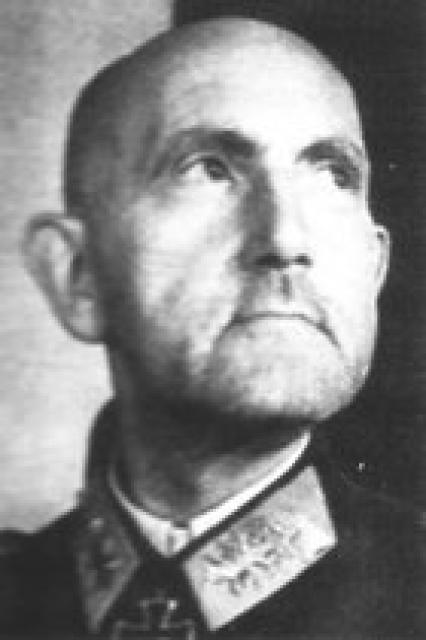
Otto Korfes was a German military leader, born in 1889. His father was a pastor, and Korfes was the fifth child in the family. In 1901, the family moved to Kattenstädt, where Korfes attended high school and graduated in 1909.
Military Career
In May 1909, Korfes joined the 66th Infantry Regiment in Magdeburg. In 1910, he was promoted to lieutenant, and in 1914, he was deployed to the Western Front at the outbreak of World War I. He earned the Iron Cross 2nd Class in September 1914 and the Iron Cross 1st Class in 1916. In 1917, he became a captain. In 1918, he was severely wounded shortly before the war's end and spent time in a hospital until January 1919.
After the war, Korfes worked for the German Officers' Union in Berlin and studied philosophy at the University of Berlin. He also began working at the Central Department of the Reich Archive in 1920. In 1923, he earned a doctorate in socio-political sciences and joined the Reich Archive's military history department. He gave lectures and published his writings on military history.
Nazi Germany and World War II
In 1937, Korfes left the Reich Archive and rejoined the army, where he was made a major and assigned to the 66th Infantry Regiment. He participated in the occupation of the Sudetenland in 1938 and became commander of the 66th Regiment shortly after. In 1940, he was appointed commander of the 518th Infantry Regiment, which fought in the invasion of France.
On June 22, 1941, Korfes's regiment invaded the Soviet Union as part of the 295th Infantry Division. The division fought its way to the east until it was transferred to the 6th Army in August 1942, which was advancing on Stalingrad. In November 1942, Korfes became acting commander of the 295th Infantry Division, and in January 1943, he was officially appointed commander and promoted to general-major.
Stalingrad and Captivity
Despite his rank and awards, Korfes could not change the dire situation of the 6th Army in Stalingrad. In January 1943, the army was encircled and annihilated. On January 31, 1943, Korfes surrendered in his dress uniform and full regalia.