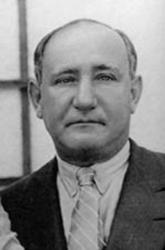
Otto Ludwig Preminger
 USA
USABiography of Otto Ludwig Preminger
Otto Ludwig Preminger (December 5, 1906 – April 23, 1986) was an American producer and director. Born into a prominent Austrian legal family, he was expected to follow in his father's footsteps, but even after obtaining his diploma, he couldn't leave M. Reinhardt's theater, where he combined performances on stage with the position of assistant director. His rapid advancement in the theater industry, becoming not only a director and producer but also the head of the Viennese theater "Josefstadt" by the late 1920s, contributed to his career in film.
In 1931, he directed his first film, "Die Grosse Liebe" (The Great Love). After the success of the Broadway version of his popular Viennese production "Libel," Preminger was invited to Hollywood in 1935. However, his acclimatization at 20th Century Fox was painful. As a result of a conflict with the head of Fox, Darryl F. Zanuck, and the failure of his comedies "Under Your Spell" (1936) and "Danger·love At Work" (1937), Preminger was blacklisted as a commercially unpromising figure in Hollywood.
During World War II, he appeared in roles as Nazis in anti-fascist dramas. In 1944, after overcoming Zanuck's resistance, he directed the crime drama "Laura" (Oscar-nominated for Best Director). After the war, he directed a series of salon comedies in the spirit of Ernst Lubitsch, a series of melodramas, and the unsuccessful adaptation of the best-selling novel "Forever Amber" (1947). From the early 1950s, he became an independent producer, one of the first of this generation, and it is this aspect of Preminger's career that is associated with his fame and significance for American cinema.
Like no other, Preminger was not afraid to give work to filmmakers listed as unreliable elements. He constantly challenged Hollywood conventions: in "The Moon Is Blue" (1953), he violated the pharisaic prohibitions on the use of vulgarity in dialogue, and in "The Man With The Golden Arm" (1955), he first raised the issue of drug addiction. His free adaptation of the opera "Carmen," "Carmen Jones" (1954), featuring only African-American actors, was a huge success. However, his subsequent works, such as "Saint Joan" (1957, based on George Bernard Shaw's play) and "Porgy And Bess" (1959, based on George Gershwin's opera), were rejected by both critics and audiences.
The end of the 1950s brought Preminger successes such as the detective film "Anatomy Of A Murder" (1959) and the political drama "Advise And Consent" (1962). However, his films in the 1960s did not fit well into the contemporary cinematic landscape due to their theatricality, disregard for editing, and screen plasticity.