Paul Seruzie
 France
- The Early Life and Education of Paul Sérusier
- Encounter with Gauguin and the Birth of "Nabis"
- Artistic Development and the "Cloisonnism" Method
- Symbolism and the Intellectual Dimension
- Influence and Recognition
- Later Years and Legacy
The Early Life and Education of Paul Sérusier
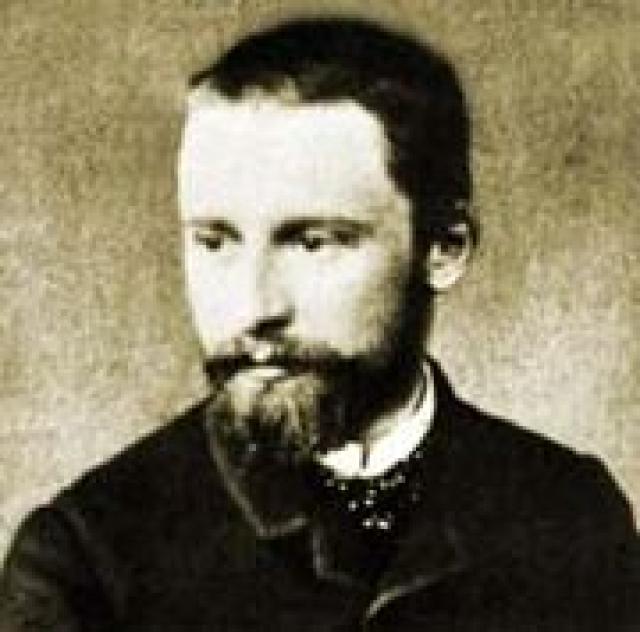
Paul Sérusier was born into an affluent bourgeois family in Paris on November 9, 1864. He received an exceptional education at one of France's most prestigious lycées, where he excelled in various fields. Sérusier possessed a multifaceted intellect, physical prowess, and an exquisite singing voice. He wrote poetry, immersed himself in theater and Eastern culture, and studied Arabic and Hebrew.
Encounter with Gauguin and the Birth of "Nabis"
Sérusier's passion for painting reluctantly overrode his parents' resistance towards his artistic pursuit. He enrolled at the Académie Julian, studying under teachers who generally adhered to classical painting traditions. Sérusier's talent and charisma quickly propelled him to a leadership role among his peers.
In 1888, Sérusier's life took a transformative turn when he traveled to Pont-Aven, Brittany, and crossed paths with Paul Gauguin. During a fleeting encounter in a forest, Gauguin imparted a pivotal lesson that would forever shape Sérusier's artistic direction. Gauguin instructed him to simplify and symbolize nature, emphasizing vibrant colors and distinct shapes. Sérusier's landscape painting based on that encounter became his "talisman," embodying the revolutionary principles he learned.
Upon returning to Paris, Sérusier shared Gauguin's ideas with his friends from the Académie Julian, including Maurice Denis, Pierre Bonnard, Édouard Vuillard, Félix Vallotton, Paul Ranson, and others. These artists, collectively known as the "Nabis" (prophets), were deeply influenced but not wholly converted to Gauguin's aesthetic.
Artistic Development and the "Cloisonnism" Method
Sérusier made multiple visits to Gauguin in Brittany and even lived with him in Le Pouldu in 1889. He absorbed Gauguin's lessons with remarkable speed, evolving from an academic painter into a modern artist. Sérusier sought to intellectualize Gauguin's artistic breakthroughs, questioning the role of nature in art and the boundaries between direct observation and the artist's imagination.
Initially, Sérusier's works closely resembled Gauguin's, but he gradually developed his own distinct style, which became evident in paintings such as "The Pont-Aven Triptych." Sérusier employed Gauguin's "cloisonnism" technique, using bold outlines and distinct color planes. However, while for Gauguin cloisonnism was a means to achieve expressive immediacy, Sérusier saw it as a decorative device to convey the intricate patterns of forms and the beauty of local hues.
Symbolism and the Intellectual Dimension
Sérusier imbued his paintings with intellectual depth, often incorporating literary and symbolic content. In "The Pont-Aven Triptych," he depicted a harvest scene as a mythological and poetic composition, evoking archetypal images and a wide range of historical and artistic associations.
Sérusier's theoretical writings became as influential as his paintings. As a leading ideologist of the Nabis group, he advocated for a pictorial symbolism that could convey emotions and ideas through the interplay of forms and colors. He praised Gauguin as a revolutionary and presented the Nabis' art as a novel synthesis of various artistic traditions.
Influence and Recognition
Throughout the early 1890s, Sérusier emerged as a prominent figure in French art. He played a pivotal role in shaping artistic trends and was credited with many of the innovations attributed to the absent Gauguin. Art critic André-Ferdinand Schuré called him the most promising young painter in his influential article "The Symbolists."
Sérusier's travels through Italy and Germany with Maurice Denis further expanded his artistic horizons, as they discovered the aesthetics of early Italian and German masters. Sérusier also actively participated in literary circles and embraced the mysticism and ritualism associated with the Symbolist movement.
Later Years and Legacy
Sérusier's later years were marred by his wife's illness. In 1907, he became a professor at the Académie Ranson and began work on his renowned theoretical treatise, "ABC of Painting," which influenced generations of artists. Sérusier's own creative output waned in his later years.
While Paul Sérusier occupies a less prominent place in art history compared to Gauguin and other contemporaries, his work remains a fascinating testament to his artistic journey. He lived and worked during a transformative period, contributing significantly to the artistic developments that would shape the course of modern art.