Pelagius
Pelagius, known in Spanish as Pelayo, is remembered as the first ruler of Asturias and the leader of an early Christian resistance to Muslim rule in northern Iberia. His story stands at the intersection of history and national legend: a local uprising is historically plausible, but the celebrated Battle of Covadonga comes to us through chronicles written generations later.
Origins in a changing peninsula
Pelagius lived in the early eighth century, after Muslim forces had conquered most of the Visigothic kingdom in Iberia. His origins are uncertain. Later Asturian accounts describe him as a Visigothic nobleman connected with the former royal court, while modern historians have cautioned that the details of his background are difficult to verify.
The earliest surviving Christian chronicle from the peninsula, written in 754, does not mention Pelagius by name. The main narratives of his life were composed at the court of Asturias in the late ninth century, more than a century after the events they describe. Those accounts portray him as a leader who established himself in the mountainous north and rallied local communities against the new rulers.
The revolt and Covadonga
Asturian tradition places Pelagius’s uprising around 718 and his victory over a Muslim expedition at Covadonga around 722. The dates remain disputed, and scholars continue to question how closely the later chronicles reflect the scale and details of the original events. What seems most credible is that Pelagius led a regional revolt in the Asturian mountains and became the focus of a small but durable center of local power.
The stories of Covadonga grew in importance over time. In later retellings, the encounter became a dramatic turning point and a symbol of Christian resistance. The victory was associated with the beginnings of the Kingdom of Asturias, whose rulers gradually expanded their influence across parts of northern Iberia. Pelagius’s achievement was likely more modest than the later legend suggests, but the survival of his political base gave it lasting consequences.
A founder remembered
Pelagius ruled from a center at Cangas de Onís and was succeeded by his son Favila, according to the Asturian chronicles. He died in the 730s. Later generations made his reign the starting point of a much longer Christian reconquest narrative, though this interpretation reflects the concerns and politics of writers who lived centuries after him.
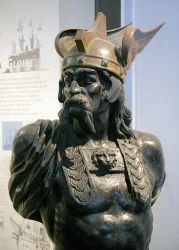
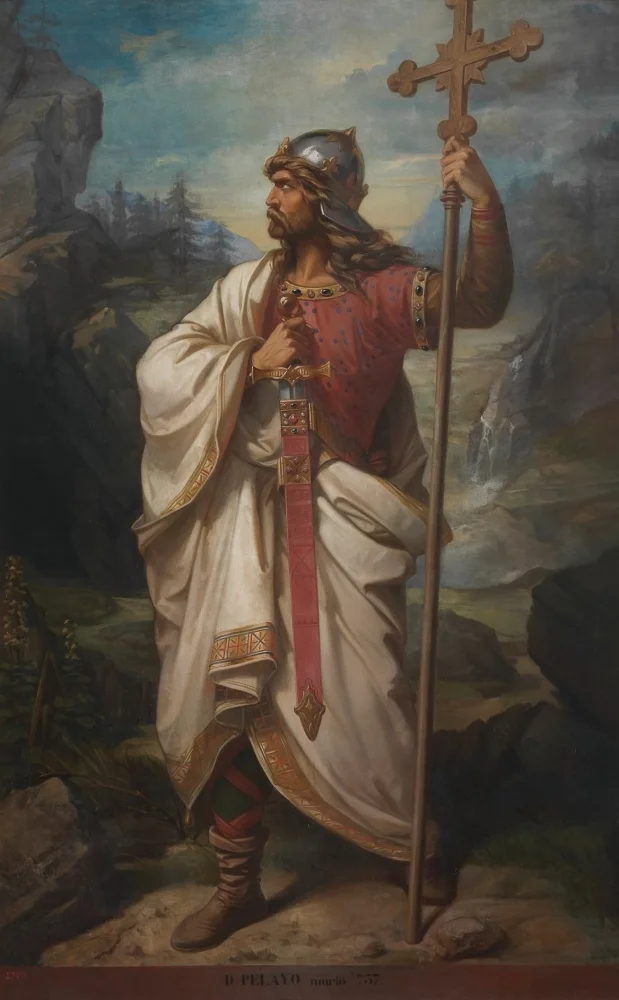
His reputation endured because the small Asturian kingdom became a lasting political power. The image of Pelagius as a heroic king at Covadonga helped later rulers connect their authority to a founding struggle. Separating that powerful memory from the thin contemporary evidence is essential: Pelagius was a real early medieval leader, while many details of the familiar story remain uncertain.