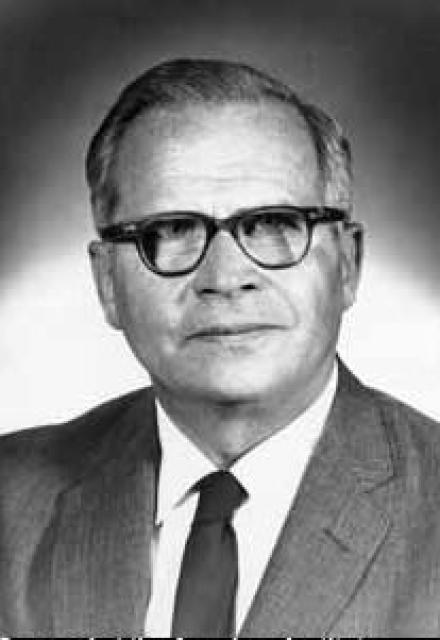
Peter Carl Goldmark
 USA
USA- Biography of Peter Carl Goldmark
- Early Life and Education
- Contributions to Long-Playing Record
- Color Television and RCA/NBC
- EVR and Later Career
- Later Life and Legacy
Biography of Peter Carl Goldmark
Peter Carl Goldmark was a German-Hungarian engineer and Hungarian immigrant who developed the system for color television. He first demonstrated this system on August 29th, 1940 and presented it to the press on September 3rd. The system used a rapidly rotating color wheel to alternate the transmission of red, green, and blue lines. It had 343 lines, which was 100 less than the black and white version, and a different scanning speed, making it incompatible with televisions available on the market at that time.
Early Life and Education
Goldmark first encountered television in 1936 while pursuing postgraduate education in Vienna, Austria. He hoped to work with John Logie Baird but was turned down during a lunch meeting in London. After this disappointment, Goldmark joined the CBS Laboratories in the United States and obtained American citizenship in 1937.
Contributions to Long-Playing Record
Working alongside Columbia Records, Goldmark played a significant role in the development of the long-playing (LP) record format with a speed of 33⅓ revolutions per minute. This format, introduced by Goddard Lieberson, a composer and president of Columbia Records, became the industry standard for many years.
Color Television and RCA/NBC
While the CBS network used Goldmark's color system in their broadcasts from 1950 to 1951, the "compatible color" technology developed by Richard Kell and George H. Brown for RCA and NBC was compatible with black and white televisions. Despite the lower resolution, many acknowledged that CBS's color wheel system provided better image quality. However, the issue of compatibility led to its downfall. In July 1953, the improved RCA/NBC color system became the industrial standard chosen by the Federal Communications Commission (FCC) in December 1953, while CBS abandoned its sequential color system and embraced the mandatory standards.
EVR and Later Career
After the success of the LP record, Goldmark spent the following two decades at CBS Laboratories working on various inventions, including Electronic Video Recording (EVR). The remarkable device for home video playback was first presented in 1967, with a black and white prototype demonstrated in 1969. However, the invention proved to be too complex and expensive for production. Additionally, CBS Laboratories were concerned about potential competition from other manufacturers, particularly those producing video devices with recording capabilities.
In the end, the EVR system, like Goldmark's color television system, was replaced in late 1971 by Sony's U-Matic 3/4" video format, which was more affordable and efficient to use. Despite this setback, Goldmark's LP record format remained the standard in the music industry until it was replaced by CDs in the late 1980s.
Later Life and Legacy
Upon reaching retirement age at 65, Goldmark left CBS in 1971 and formed Goldmark Communications. He conducted research on the use of communication technologies for teleconferencing and remote medical consultations, especially for individuals living in rural areas. In recognition of his contributions, Goldmark was awarded the Elliott Cresson Medal in 1969, and on December 22nd, 1977, he received the National Medal of Science from President Jimmy Carter.
Tragically, Peter Carl Goldmark died in a car accident on December 7th, 1977, in Westchester County, New York.




