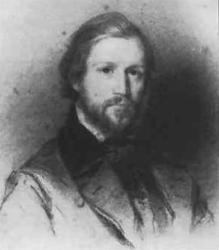
Peteris Vasks
 Latvia
- Early Life and Education
- Return to Latvia and Composition Studies
- International Recognition
- Musical Output
- Symphonies:Second Symphony (1998), Third Symphony (2004-2005)
- Legacy
Early Life and Education
Pēteris Vasks, the renowned Latvian composer, was born to a family of Lutheran priests. His early years were spent in Lithuania, where he was forced to seek musical education due to political tensions in Latvia. In 1970, he graduated from the Lithuanian Academy of Music as a contrabassist and pursued a career as an orchestral musician. During this time, he played with ensembles such as the Lithuanian Philharmonic Orchestra, Latvian National Opera Orchestra, and Symphony Orchestra of Latvia.
Return to Latvia and Composition Studies
In 1978, Vasks returned to Latvia and completed his studies in composition at the Latvian State Conservatory. He initially explored aleatoric techniques inspired by composers such as Lutosławski, Penderecki, and Kram. However, in the 1980s, he developed his unique musical language.
International Recognition
Vasks's compositions gained international attention in the late 20th century. He became an Honorary Member of the Latvian Academy of Sciences in 1994 and received the prestigious Herder Prize in 1996. A year later, he was awarded the Grand Music Prize of Latvia. In 2001, he was inducted into the Royal Swedish Academy of Music.
Musical Output
Vasks's extensive catalog of works includes:Chamber and Instrumental Music:Three Pieces for Clarinet and Piano (1973), Partita for Cello and Piano (1974), Moments musicaux for Clarinet Solo (1977), Sonata for Contrabass Solo (1986)
Orchestral and Choral Works:Concert for Mixed Choir (1978), Cantabile per archi (1979), Musica dolorosa for String Orchestra (1983), "Lātvija" (Chamber Cantata) (1987), Concerto for Cello and Orchestra (1994)
Symphonies:Second Symphony (1998), Third Symphony (2004-2005)
Sacred Music:Pater Noster for Mixed Choir (1991), Te Deum for Organ Solo (1991), Dona nobis pacem for Mixed Choir and String Orchestra (1996), Mass for Mixed Choir and String Orchestra (2000-2005)
Legacy
Pēteris Vasks is widely regarded as one of the most influential composers of his generation. His music is characterized by its emotional depth, spiritual undertones, and innovative use of techniques. His compositions continue to be performed and recorded internationally, leaving an enduring legacy in the world of classical music.