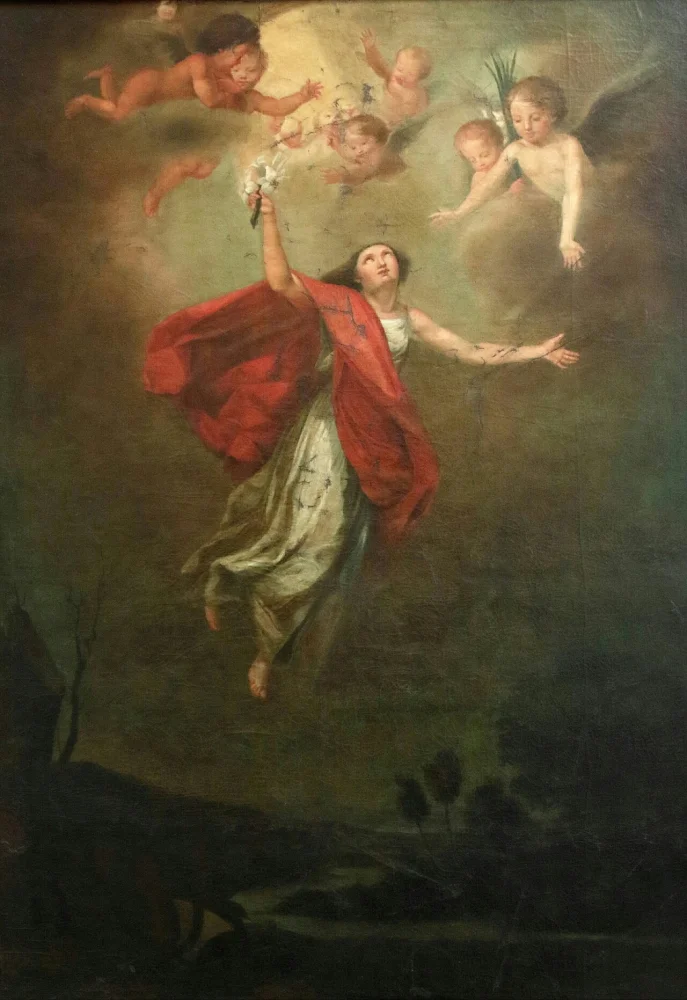
Philomena
Saint Philomena became the focus of a popular nineteenth-century Catholic devotion, although little can be established about her as a historical person. Her reputation grew from the discovery of human remains in a Roman catacomb in 1802 and a later legend that described a young Christian martyr. The story inspired generations of pilgrims, but the evidence for the life traditionally attributed to her remains uncertain.
A tomb discovered in Rome
On 25 May 1802, excavators opened a tomb in the Catacomb of Priscilla in Rome. The burial contained the bones of a young person and several tiles bearing a fragmentary Latin inscription, which was rearranged to read “Pax tecum, Filumena,” or “Peace be with you, Philomena.” A small glass vessel was also found and was initially taken as a sign of martyrdom.
The identification of the remains as those of a saint named Philomena was based on the inscription and symbols on the tiles. Later archaeological study questioned that interpretation: the tiles may have been reused from another grave, and the name may not securely identify the person buried there.
The martyrdom legend and growing devotion
In the nineteenth century, a detailed account circulated describing Philomena as a young Greek princess who was martyred under Emperor Diocletian. The story was attributed to revelations reported by a nun in Naples, rather than to ancient historical records. Philomena is not mentioned in early Christian sources, so the narrative is generally treated as a devotional legend rather than verified biography.
The remains were transferred in 1805 to Mugnano, near Naples. Reports of answered prayers and miracles helped the devotion spread, and Pope Gregory XVI authorized a special feast in her honor in 1837. John Vianney, the parish priest of Ars, became one of her best-known nineteenth-century devotees.
A contested historical identity
In 1961, Philomena’s feast was removed from the General Roman Calendar as part of a reform that considered the limited historical evidence for some saints. This did not erase her local devotion, which continues in places where she is venerated.
Philomena’s story illustrates how archaeology, legend, and popular faith can combine to create a powerful religious cult. Although the identity and life of the person found in the Roman tomb remain uncertain, devotion to Philomena became a significant part of nineteenth-century Catholic religious culture.